
Health information can only save lives if it’s meaningful to those lives who seek it.
Across Europe valuable peer developed harm reduction resources remain inaccessible to the communities that need them most. While guidance on safer injecting, hepatitis C (HCV) testing, treatment and care pathways, access to naloxone, and peer-led health interventions are sometimes available in English, language continues to be a significant barrier for many people who use drugs, and an overreliance and anglo-centricity means people can’t experience information in their local language. This can damage the meaningful engagement opportunities that harm reduction seeks to champion. If we truly mean “nothing about us without us” then we also say:
Rien sur nous sans nous
Nieko apie mus be mūsų
Nic o nas bez nas
Nada sobre nós sem nós
Nič brez nas o nas
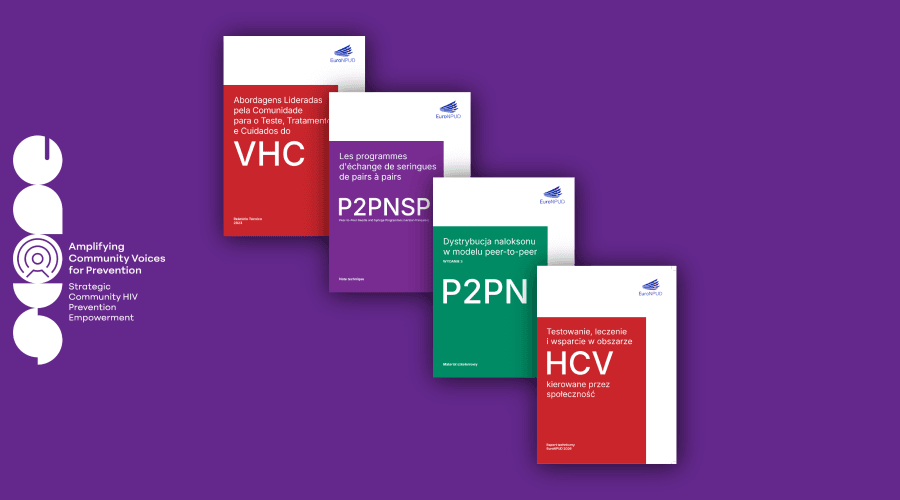
Over the past year, EuroNPUD worked with three community-led organisations in France, Portugal, and Poland to address this challenge through a project supported by the European AIDS Treatment Group (EATG) SCOPE programme. Together, we translated, adapted, produced, and disseminated harm reduction resources in French, Portuguese, and Polish. More importantly, we ensured these materials reflected the realities, experiences, and needs of local communities.
The project reinforced something that people who use drugs have always known: meaningful health information cannot simply be translated, it must be understood, trusted, and owned by the communities it is intended to serve.
Why was it necessary to translate these resources?
Many excellent harm reduction resources already exist. International organisations, researchers, and community networks have produced evidence-based materials covering topics such as safer drug use, hepatitis C, overdose prevention, and peer-led interventions. However, much of this information is developed in English. EuroNPUD works mainly in English though our members speak a broad range of languages.
For many people who use drugs, our English-language materials are not accessible. Even when translated informally, they may fail to reflect local healthcare systems, available services, legal frameworks, or cultural realities. Information that is technically accurate can still be difficult to apply if it does not speak to people’s living experiences in their own language.
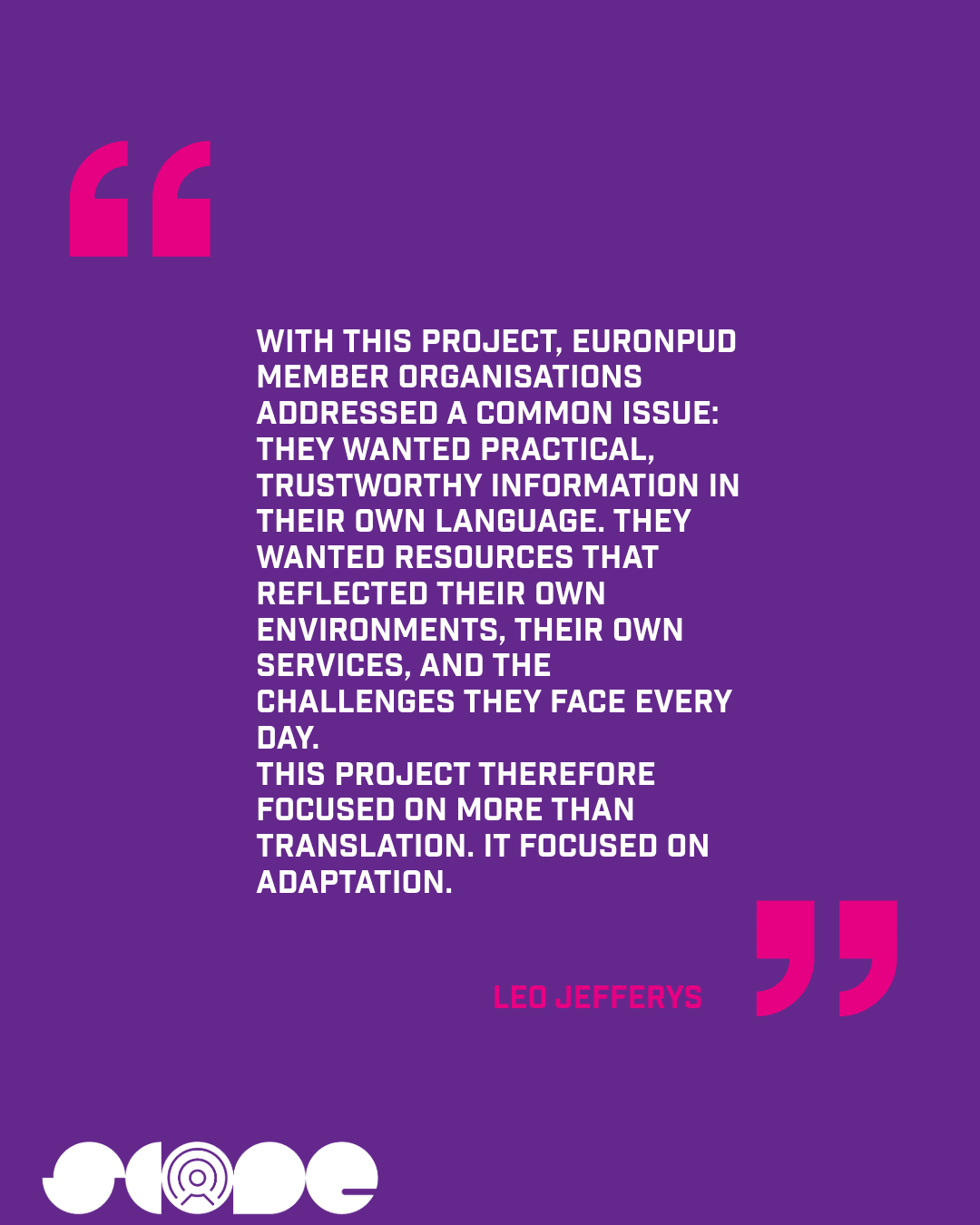
With this project, our member organisations addressed a common issue: they wanted practical, trustworthy information in their own language. They wanted resources that reflected their own environments, their own services, and the challenges they face every day.
This project therefore focused on more than translation. It focused on adaptation.
In France, community members worked with Mantes La Galette to ensure that the Peer-to-Peer Needle Syringe Provision Technical Briefing included additional examples from local organisations and reflected the realities of peer-led harm reduction work in the French context. These local examples came from Nouvelle Aube in Marseilles and Trans Et Tox in Paris.
In Portugal, Manas, a network of women and gender diverse people who use drugs, brought their living experience to review and adapt the EuroNPUD resource on Community-led Approaches to HCV Testing, Treatment, and Care (HCV TTC). Their feedback helped ensure that the language was clear, relevant, and community-centred.
In Poland, PoliNPUD worked with peer consultants to review EuroNPUD resources: Safer Injecting Training, HCV TTC, and the Peer 2 Peer Naloxone Technical Briefing. Their input helped ensure that information reflected current conditions, available services, and the practical realities faced by people who inject drugs.
This process transformed existing materials into tools that communities could immediately use for education, outreach, advocacy, and peer support.
What were the outcomes?
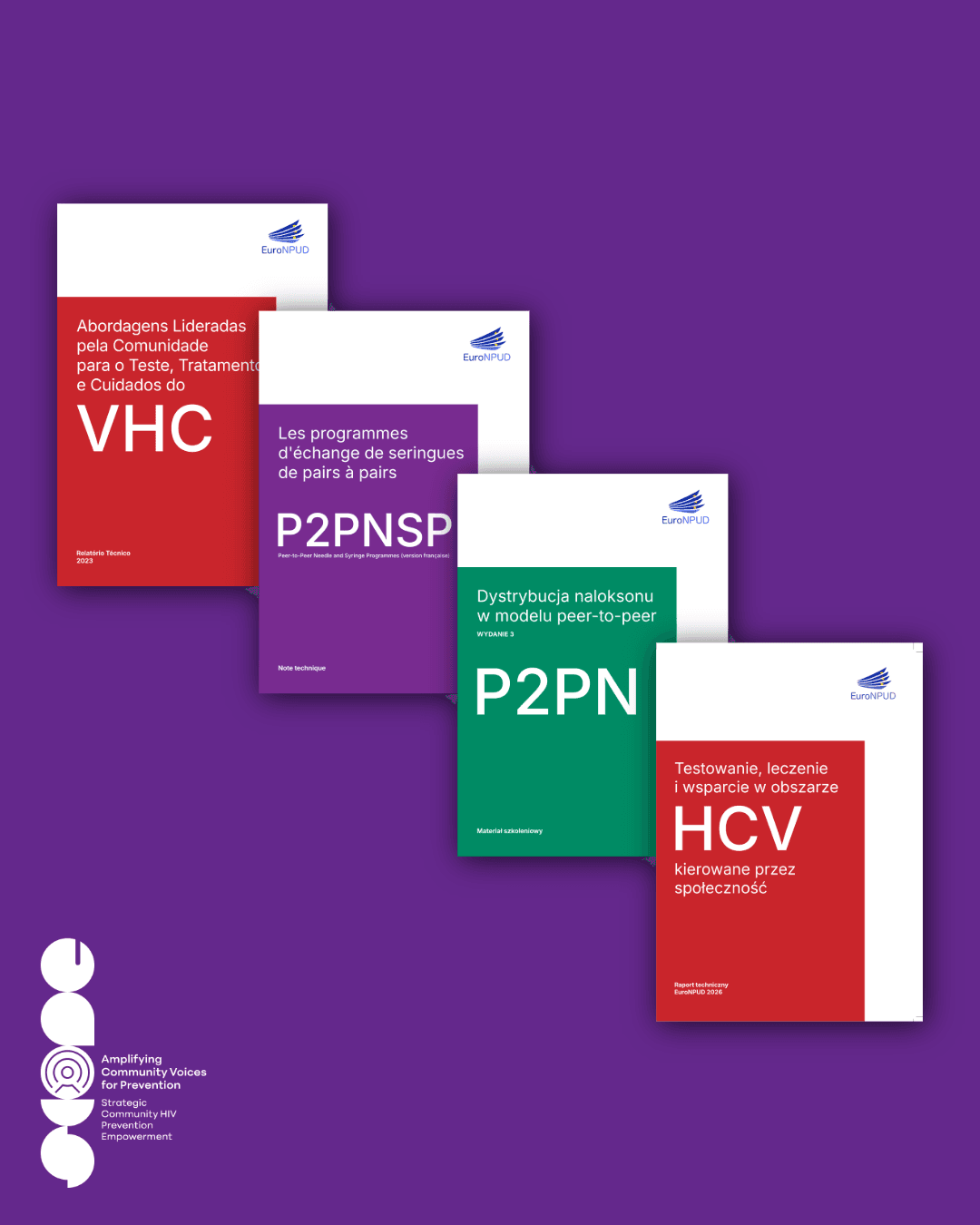
The most tangible outcome was the production of five translated and adapted resources:
- Peer-to-Peer Needle Syringe Provision Technical Briefing (French)
- Community-Led Approaches to HCV Testing, Treatment and Care (Portuguese)
- Safer Injecting Course (Polish)
- Community-Led Approaches to HCV Testing, Treatment and Care (Polish)
- Peer-to-Peer Naloxone Technical Briefing (Polish)
The project’s impact also went beyond the resources themselves. The process was led by people who use drugs. They led focus groups, translated text, participated in consultations, reviewed materials, shared experiences, contributed examples, and helped shape dissemination activities. Their leadership ensured that the resources were not only accurate but also practical and meaningful, and that the project was of benefit beyond a simple booklet or social media post.
The project also strengthened collaboration between community-led organisations across Europe, and strengthened EuroNPUD as a network. Despite operating in different countries and languages, and despite experiencing ongoing capacity issues due to the current funding crisis of harm reduction, the participating groups shared a commitment to improving access to health information and amplifying the voices of people who use drugs.
In Poland, the translated Safer Injecting Course was adapted into a shorter workshop format to be directly delivered to community members in Warsaw. This adaptation creates opportunities for ongoing education and allows the material to continue evolving alongside emerging trends and best practices.
In Portugal, a multilingual video was produced in Portuguese and Mauritian Creole, with English subtitles, helping to extend the reach of key messages about HCV prevention, testing, treatment, and care.
Perhaps most importantly, the project demonstrated what community-led organisations can achieve with relatively modest resources. All participating groups operate with limited funding and limited human resources. Despite these challenges, they produced high-quality outputs that will continue benefiting communities long after the project has ended.
How did we disseminate the information, and who did we reach?
Dissemination was designed to reach people where they already are—both online and within their communities.
At the European level, all resources were published through EuroNPUD’s website and promoted through social media channels, including Facebook, Instagram, YouTube, and partner networks. Cross-promotion between organisations helped maximise visibility and encouraged sharing across harm reduction and public health communities. At the national level, each organisation developed dissemination activities tailored to local needs.
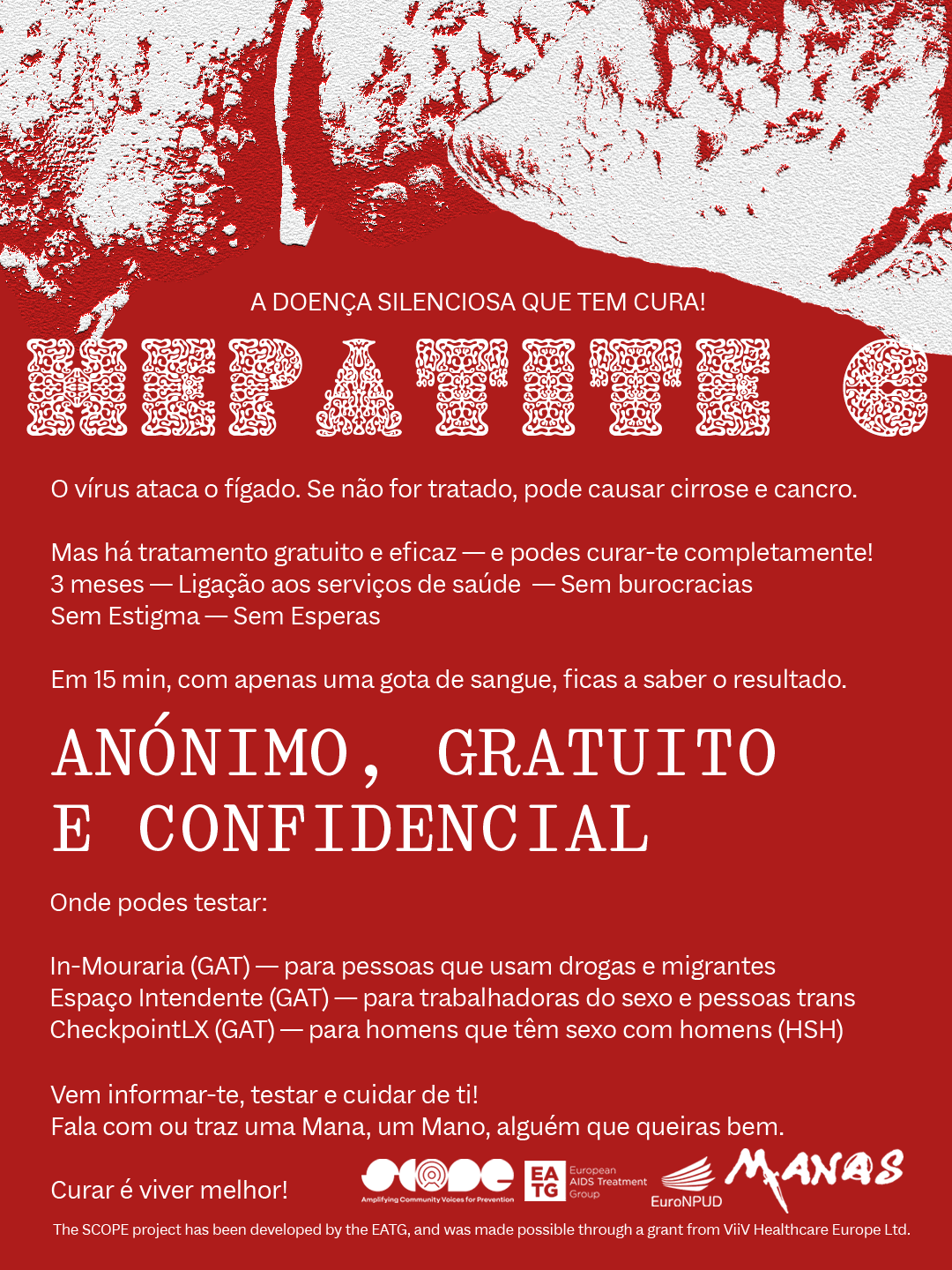
In Portugal, MANAS combined peer outreach, printed materials, community events, and digital communications. They also produced a flyer about HCV TTC that was then distributed on peer led outreach in the streets of Lisbon. Around 50 printed copies of the HCV TTC flyer were distributed. Materials were also shared during community events focused on health and wellbeing, creating opportunities to engage women and gender-diverse people who use drugs in discussions about HCV prevention and care.
In France, Mantes La Galette integrated dissemination into its ongoing outreach work. Printed brochures were distributed during community activities and professional events, while QR codes linked people directly to digital versions of the resource. The materials were also shared with organisations interested in peer-led harm reduction approaches. Most recently at the Federation Addiction conference, the P2PNSP French version was available in hard copy.
In Poland, PoliNPUD distributed resources through harm reduction centres, drop-in services, workshops, social media platforms, online community forums, and stakeholder networks. The translated materials reached people who use drugs, peer educators, harm reduction workers, and service providers.
Collectively, the project reached a diverse audience that included people who use drugs, community organisations, peer workers, healthcare professionals, advocates, and harm reduction stakeholders. By making evidence-based information available in local languages and grounding it in lived experience, we were able to strengthen access to knowledge that supports health, dignity, and informed decision-making.
Looking Forward
One of the clearest lessons from this project is that community-led organisations are uniquely positioned to create resources that resonate with the people they serve. True accessibility requires participation, trust, and local knowledge. The success of this initiative demonstrates that even small investments in peer-led organisations can generate meaningful public health outcomes. It also highlights the need for sustainable funding that enables community groups to continue developing resources, delivering education, and advocating for the health and rights of people who use drugs. When communities lead, the results are not only more effective, they are more relevant, more accessible, and ultimately more impactful.
Leo Jefferys
Acting Executive Director, EuroNPUD (European Network of People who Use Drugs)
You can find the materials on the side/bottom widget of this page.
EATG’s SCOPE project aims to strengthen the skills and knowledge of community health workers, advocates and researchers in the field of HIV combination prevention. It focuses on communities that are inadequately served by policies and programmes.
The SCOPE project has been developed by the EATG and was made possible through a grant from ViiV Healthcare Europe Ltd.
Source : EuroNPUD
Materials
- SCOPE/EuroNPUD: Community-Led Approaches to HCV Testing, Treatment and Care (Portuguese)
- SCOPE/EuroNPUD: Peer-to-Peer Needle Syringe Provision Technical Briefing (French)
- SCOPE/EuroNPUD: Community-Led Approaches to HCV Testing, Treatment and Care (Polish)
- SCOPE/EuroNPUD: Peer-to-Peer Naloxone Technical Briefing (Polish)
- SCOPE/EuroNPUD: Safer Injecting Course (Polish)
Get involved
Are you living with HIV/AIDS? Are you part of a community affected by HIV/AIDS and co-infections? Do you work or volunteer in the field? Are you motivated by our cause and interested to support our work?
Subscribe
Stay in the loop and get all the important EATG updates in your inbox with the EATG newsletter. The HIV & co-infections bulletin is your source of handpicked news from the field arriving regularly to your inbox.