
The SCOPE project (Amplifying Community Voices for Prevention) is led by the European AIDS Treatment Group (EATG) and is grounded in the belief that community-led research is essential for producing meaningful knowledge to inform health systems, prevention strategies, and policy. The project centres the voices of communities most affected by HIV and structural inequalities and promotes participatory approaches rooted in justice, accountability, and care. SCOPE also supports the professional development of trans and sex worker community members, enabling peers to lead community-based research and expand future research opportunities.
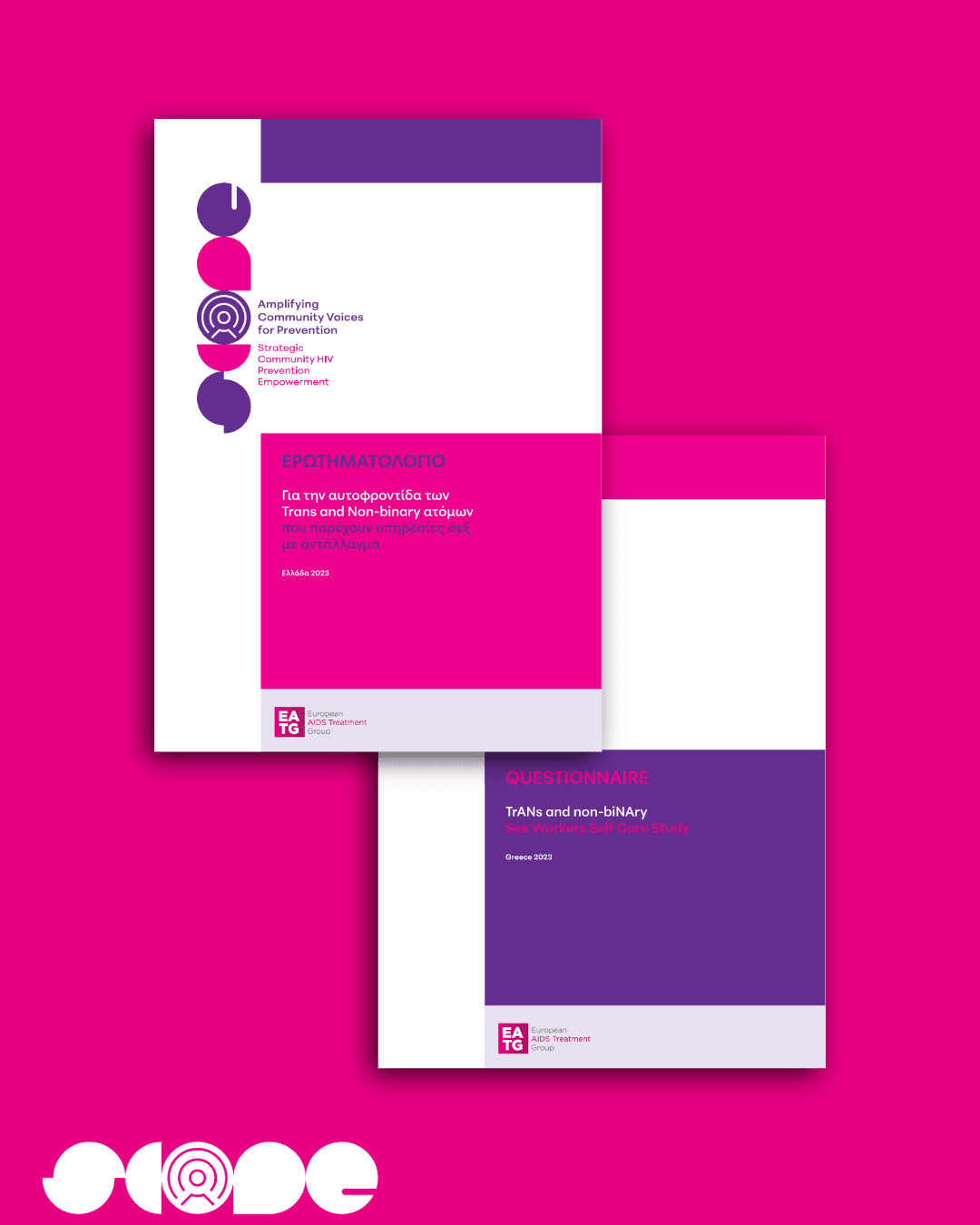
In the Materials section, readers will find the survey questions, which are provided as a blueprint for future peer research and offer a structured framework for study design and methodology. Although no further data will be collected using these questions, we hope they will serve as a starting point for other peer researchers.
As part of this community-led research, Erofili Kokkali worked with Daniela Rojas Castro and Rosemary Delabre to define her research questions, narrow the research scope, and design inclusive and comprehensive survey questions. The interview below provides a glimpse into the research progress, while the survey questions are included to support and inspire future community-led studies.
Why did you want to take part in this research, and how does your work connect to the SCOPE project?
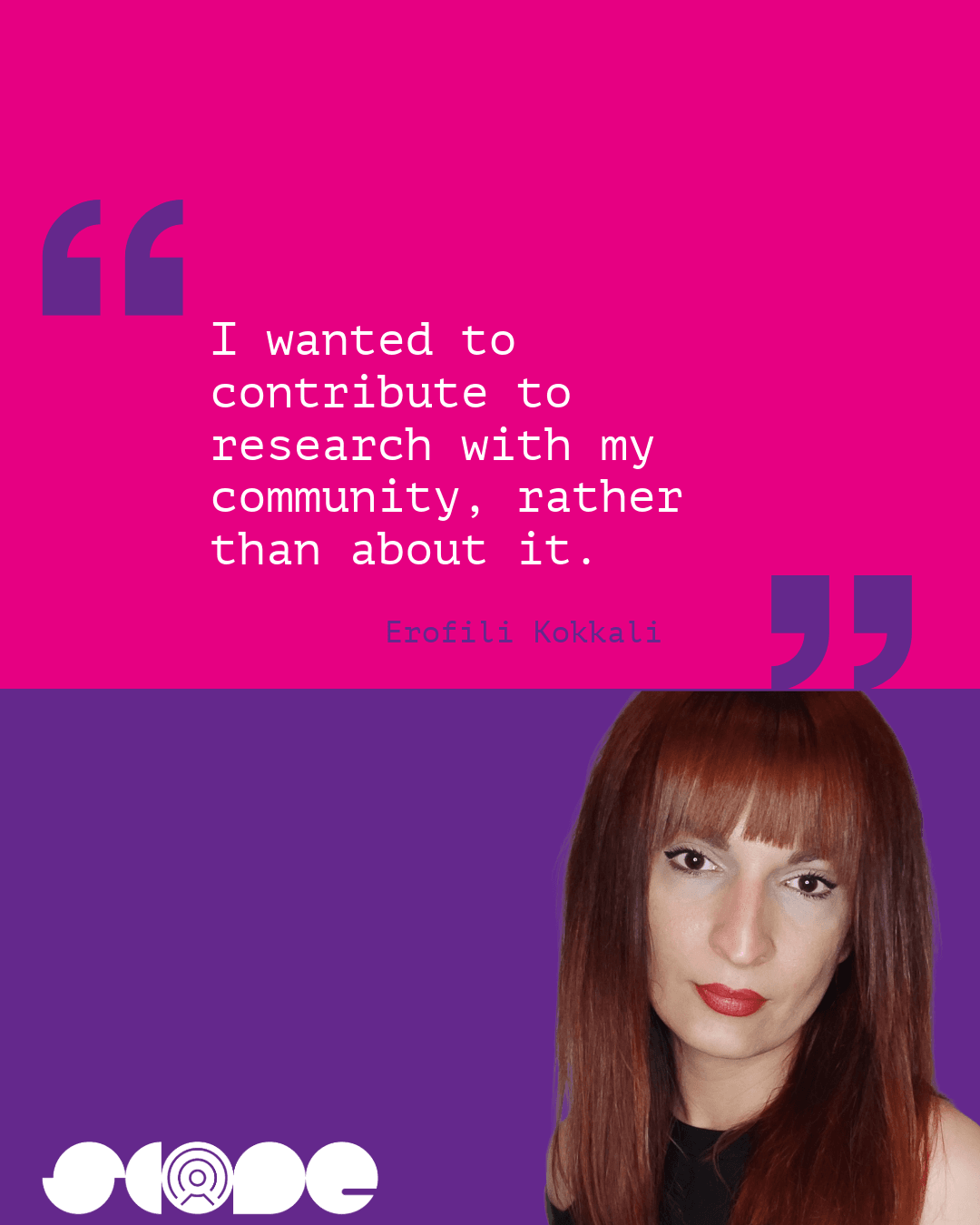
Erofili Kokkali (EK): I am a trans woman and community worker in Greece with experience in NGOs such as Positive Voice, supporting trans and non-binary communities, including sex workers, in health access and prevention. I joined the project for personal and political reasons, wanting to contribute to research with my community rather than about it. It offered a rare opportunity to bring a Greek perspective to a European-level discussion and ensure that trans and non-binary sex workers’ realities were reflected ethically and accurately.
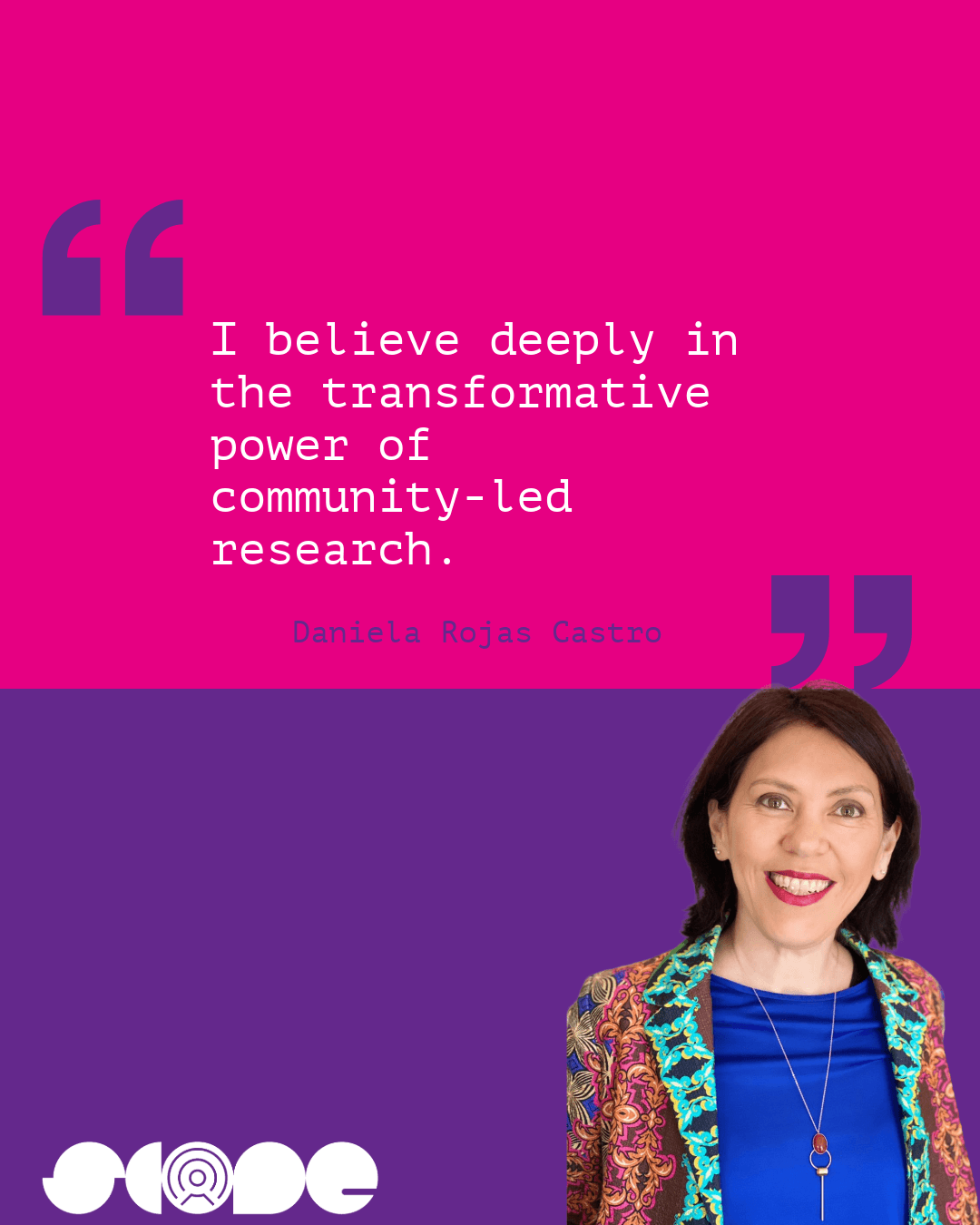
Daniela Rojas Castro (DRC): I mentored Erofili, a committed community researcher, in the design and implementation of a participatory research project focusing on PrEP knowledge among trans and non-binary sex workers who have lived and worked in Greece over the past twelve months. What motivated me to engage in this mentoring role was a deep belief in the transformative power of community-led research, especially when it comes to populations that have historically been excluded from health decision-making processes. I saw this as an opportunity to help strengthen local capacities, support a new generation of researchers, and contribute to knowledge production that is rooted in justice, care, and collective experience.
How did your collaboration work?
EK: I was fortunate to collaborate with Daniela and Rosemary Delabre, who were very understanding of why I kept wanting to add more themes and questions to the survey. For me, it felt like a cascade — each aspect of trans sex workers’ access to services is connected to many others, and I wanted the survey to reflect that complexity. At the same time, they helped me see the importance of limiting the scope. They explained that the research would be more effective and manageable if it remained focused, even if that meant including as few as ten questions.
Because this was my first experience conducting research of this kind, I felt a strong responsibility to include everything that seemed urgent or relevant on today’s agenda. I wanted to ensure that nothing essential was overlooked. This balance between my desire to be thorough and their guidance on focus was only possible because of their patience, collaboration, and willingness to share their expertise with me. Without their support, this learning process and the creation of the survey would not have been possible.
What was the scope and main objective of the questionnaire?
EK: The questionnaire was designed to explore levels of knowledge, beliefs, and perceptions about PrEP among trans and non-binary sex workers in Greece. Its primary objective was to understand how familiar participants were with PrEP, what misconceptions or concerns existed, and what barriers limited access and uptake.
These barriers included structural, institutional, cultural, and personal factors. The intention was to generate evidence that could later support advocacy efforts and inform the development of more inclusive and community-centred HIV prevention strategies.
What challenges did you face during the creation of the questionnaire?
EK: One of the challenges for me was that I wanted to include as much as possible in the questionnaire, but I was guided by Daniela and Rosemary to narrow my focus in order to achieve better results. I had been given this opportunity and wanted it to result in comprehensive research. I remember wanting to include a question about the importance of pets for our survey respondents, but we had long discussions with Daniela and Rosemary about why it should not ultimately be included in this piece of work.
DRC: Designing the questionnaire was not a linear process. One of the main challenges during mentoring sessions was staying focused on PrEP while recognising that access to prevention is deeply connected to broader social realities. The lives of trans and non-binary sex workers in Greece are shaped by legal precarity, stigma, racism, economic hardship, housing insecurity, and exposure to violence. These issues repeatedly entered our discussions. While it was not possible to address all of them within a single tool, ignoring them was also not an option.
Some questions, such as pet-related ones, cannot stand alone. They need to be framed in relation to support, family, friends, and perceived social support to be meaningful. While our survey focuses on PrEP, we faced the common challenge of deciding which important questions to include or exclude, especially with hard-to-reach populations and scarce data. This tension exists across both academia and community-led research because the issues explored are fundamental for improving lives.
Instead of dwelling on what is excluded, we focused on building research projects that address systemic gaps and highlight neglected topics. For example, although there is literature on pets and drug users, a single question is insufficient. It must be framed within a research perspective suitable for publication.
As the work progresses, Erofili adopted a researcher’s mindset, learning what to include or exclude. Capacity-building is best achieved through doing, not just webinars. It requires resources, patience, and full engagement in the research process from survey conceptualisation to publication to truly understand how research works.
How did Ana’s death affect the project?
DRC: While the questionnaire was still under development, the community was deeply affected by the death of Ana, a trans woman and sex worker in Greece. This event marked the project profoundly.
Ana’s death was not only a personal and collective loss, but also a political moment that reinforced the urgency of this work. In her memory, the questionnaire was renamed to carry her name as a tribute and an act of resistance against erasure.
EK: On a personal level, this event challenged my thinking around limiting the scope of the questionnaire. It made me more committed to making the research as inclusive and careful as possible, even within methodological constraints. The shared impact of this loss intensified our collaboration and influenced the emotional and ethical dimensions of the research process.
What technical or structural challenges did you encounter?
DRC: One major challenge was the delay caused by the ethics committee approval process. While essential for participant safety and research integrity, it added pressure to the project timeline and pushed dissemination beyond the project’s end date. We also faced significant linguistic and cultural challenges. Certain concepts related to gender identity, sexuality, prevention, and risk do not translate easily into Greek. The questionnaire therefore required careful adaptation, not just accurate translation, to ensure it was inclusive, culturally relevant, and understandable.
EK: We had choices regarding words, like whether to use “sex work” or “transactional sex,” and how to refer to different genders. We updated our knowledge to reflect current community discussions, including gender and substance names, and used wording people would understand. We also discussed how trans and non-binary sex workers approach clients, community members, or doctors, and how this related to the questionnaires Daniela and Rosemary had been working on. Of course, there was a delay because of the committee, which is understandable, but it took forever, as is typical in Greece. Once approved, it was nice to finally launch it.
How did you approach the target group and what feedback did you receive?
EK: Participants were mainly reached through community networks, peer connections, and trust built through ongoing engagement, which was essential given the marginalisation of the target group and mistrust of formal research. Some respondents found the questionnaire too long or certain questions overly specific or intrusive, highlighting the tension between meaningful data collection and respecting participants’ comfort.
I often wondered how the questionnaire would work face-to-face instead of online. Online, people answer alone, whereas face-to-face allows explanation and interaction, which I find important.
Even in Athens, the population is small and only a portion could realistically participate. Trust is key. Some people we reached through prior connections, others were unreachable, and that is okay.
The 12-month criterion excluded those not practicing sex work full-time, which is a common limitation in research. I was also told the questionnaire could have been shorter. A smaller version might have been easier to disseminate, though inclusivity made participants feel welcomed. This is a lesson I will carry forward.
What can be said about the results? What are your reflections and what would you do differently next time?
DRC: The data collected provided important insights into PrEP knowledge, existing misconceptions, and the barriers affecting access to prevention services. While the scope and sample size limit generalisation, the findings offer valuable community-informed evidence that can support advocacy, service adaptation, and future research initiatives.
Community-based research is about generating useful, actionable information, even if not published in top journals. Erofili is already applying what she learned. The process has been incredible for capacity-building, mentoring, and knowledge sharing. The only regret is not overseeing the entire process, but it has been a dream experience. From conceptualisation to early implementation, it was a major learning opportunity, highlighting both the strengths and limits of community-led research within tight timeframes and resources.
In future projects, I would pilot the questionnaire more, streamline questions, and explore formats that reduce participant fatigue. Despite challenges, this work reaffirmed the importance of research grounded in lived experience, care, and collective accountability.
EK: Trust is a big part of any process. People seek services where there is a common understanding and acceptance. Discrimination is always present, so building trust is essential.
Through this process, I have had amazing collaborators. I feel professionally upgraded and grateful for the discussions, mentoring, and previous questionnaires I could study. Even if I don’t use all this knowledge immediately, it has been a huge learning experience.
About the contributors
Erofili Kokkali
Erofili Kokkali is a Greek writer, actress, and prominent LGBTQI+ and sexual health activist based in Athens. For the last years, she has been active at the Athens Checkpoint of Positive Voice as a sexual health consultant where she works to combat HIV/AIDS stigma, having supported hundreds of people with HIV. Erofili is a published author and column writer for LiFo for the last three years.
Daniela Rojas Castro
Daniela Rojas Castro is a public health consultant with a PhD in psychology and research methodology, specialized in community-based research, qualitative approaches, and patient and community engagement in global health. She has extensive experience working on HIV, viral hepatitis, clinical trials, and access to care, collaborating with patient organizations, international NGOs, academic teams, and public institutions across Europe, Latin America, and Africa. Her work focuses on amplifying lived experience, strengthening community leadership, and translating research findings into policy-relevant recommendations and advocacy actions.
EATG’s SCOPE project aims to strengthen the skills and knowledge of community health workers, advocates and researchers in the field of HIV combination prevention. It focuses on communities that are inadequately served by policies and programmes.
The SCOPE project has been developed by the EATG and was made possible through a grant from ViiV Healthcare Europe Ltd.

Related Blogs
Get involved
Are you living with HIV/AIDS? Are you part of a community affected by HIV/AIDS and co-infections? Do you work or volunteer in the field? Are you motivated by our cause and interested to support our work?
Subscribe
Stay in the loop and get all the important EATG updates in your inbox with the EATG newsletter. The HIV & co-infections bulletin is your source of handpicked news from the field arriving regularly to your inbox.