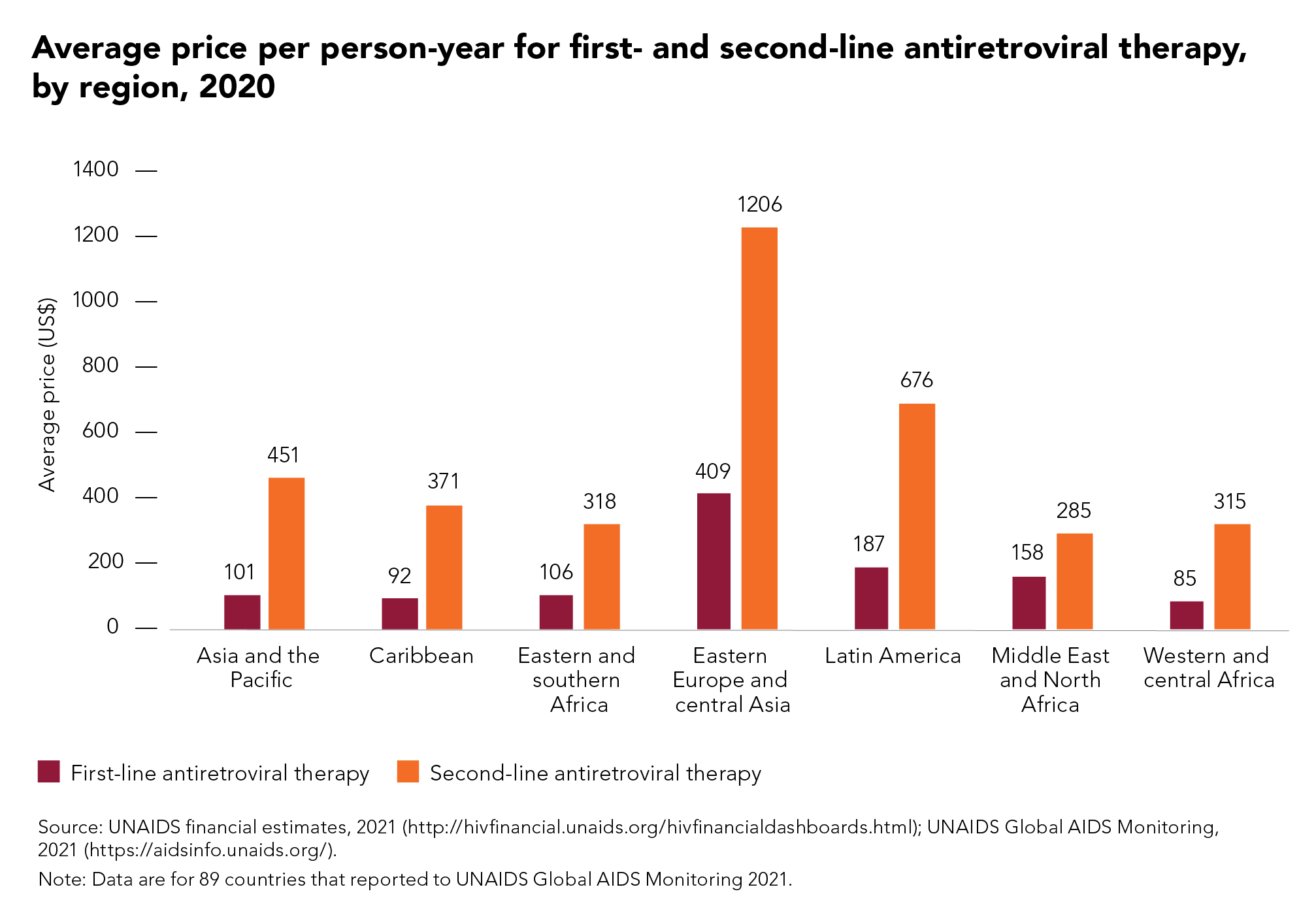
The cost of antiretroviral medicines has a major effect on resource needs for HIV responses. Currently, the average prices for first- and second-line antiretroviral therapy are broadly similar in low- and lower-middle-income countries, but are substantially higher in upper-middle-income countries.
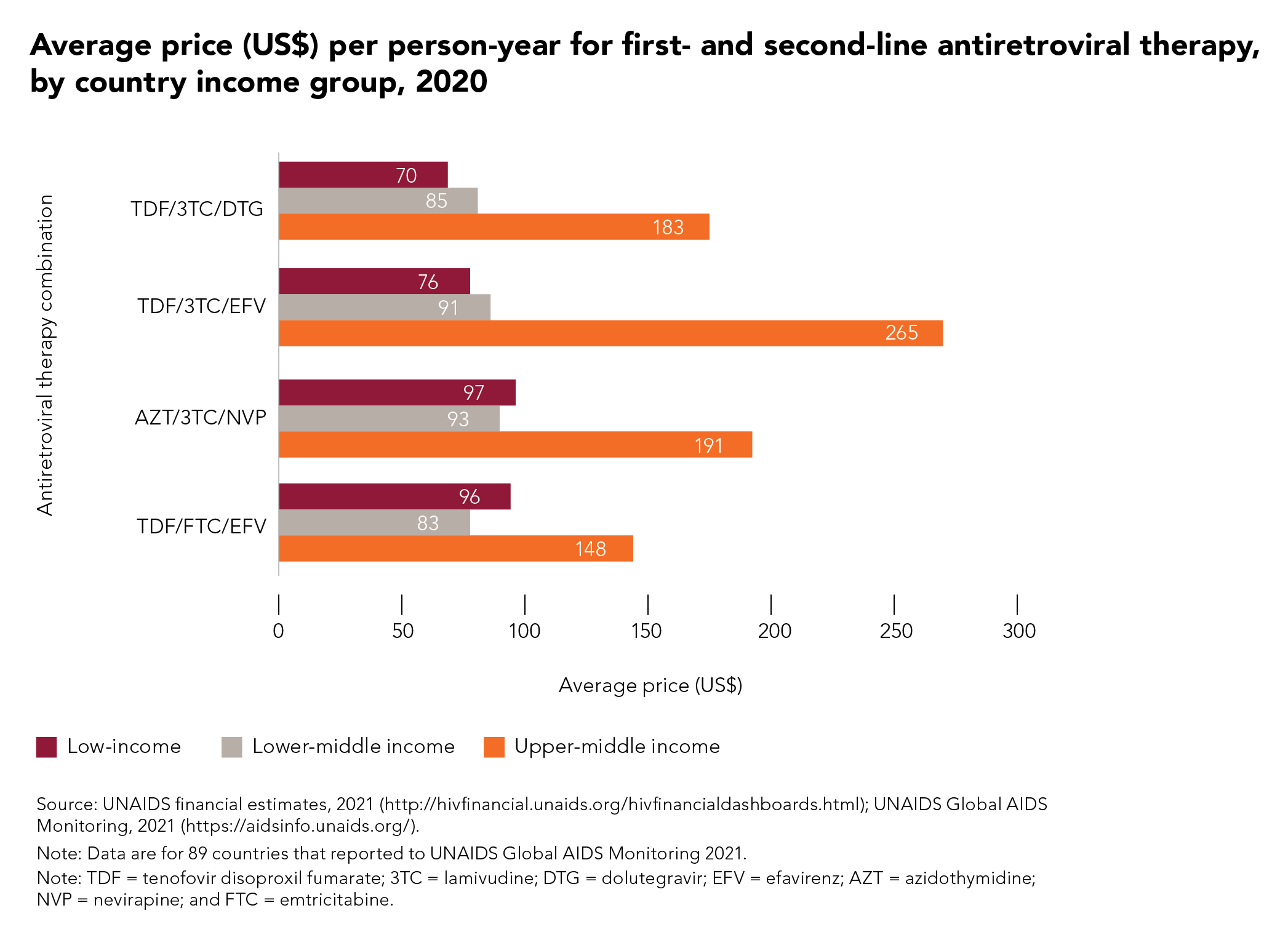
For example, countries in eastern Europe and central Asia and in Latin America tend to pay considerably higher prices for antiretroviral medicines compared with countries in other regions. Further price reductions for antiretroviral medicines and other key HIV commodities can be achieved through the strategic use of flexibilities under the Agreement on Trade-Related Aspects of Intellectual Property Rights (TRIPS) and by rearranging procurement and supply management systems to take advantage of economies of scale. If these and other cost savings are made, a 17% increase in resources for HIV testing and treatment can result in a 35% increase in the number of people receiving treatment by 2025—enough to reach the 95–95–95 testing and treatment targets.