
aidsmap news story
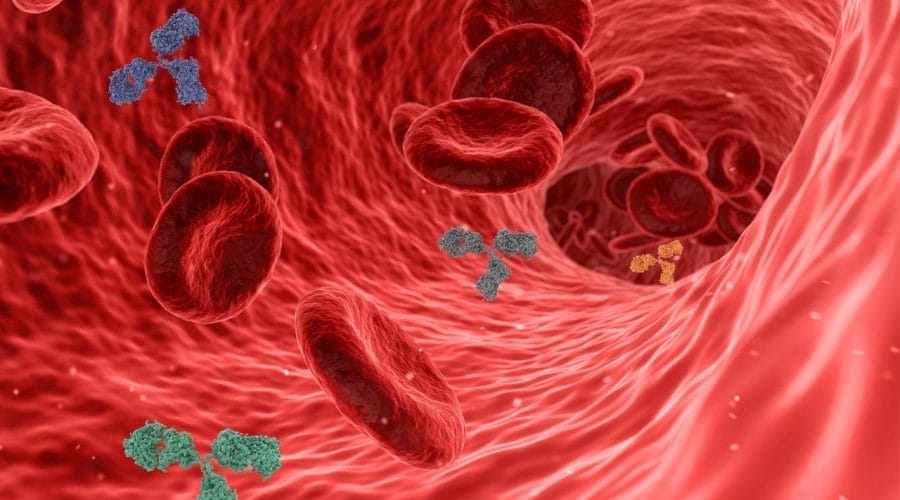
Over the last few years a number of studies aiming to cure HIV or at least achieve long-term viral suppression off antiretroviral therapy (ART) have produced tantalising results. These studies have given participants one or both of the long-acting versions of two broadly neutralising antibodies (bnAbs), 3BNC117 (teropavimab) and 10-1074 (zinlirvimab), sometimes in conjunction with immune boosting oral drugs.
These studies have produced interestingly similar results, according to a paper by Dr Zahra Kiani and colleagues at the Ragon Institute at Harvard that analysed four of them.
Normally, if someone with HIV stops taking ART, the virus becomes detectable (‘rebounds’) within two to four weeks. Only 4% of people taken off ART do not rebound or have a delayed rebound – so-called Post-Treatment Controllers (PTCs).
But in these four studies a high proportion, often a majority, of participants given the bnAbs have taken much longer to rebound – in the order of 3-5 months. These were dubbed Post-Intervention Controllers (PICs). In addition, in several studies one or two participants each have experienced, and are still experiencing, much longer periods – sometimes several years – with no viral rebound.
Read the full news story here.
Source : aidsmap
Related HIV and Co-Infections News
-
[AIDS 2026] aidsmap: Could leronlimab, a CCR5 blocker, be used to facilitate stem-cell transplant cures of HIV?
-
[AIDS 2026] aidsmap: Two more people cured of HIV after stem cell transplants, offering more clues to long-term remission
-
JAMA: HIV may hide in more cells than previously thought — here’s what that could mean for a cure
Get involved
Are you living with HIV/AIDS? Are you part of a community affected by HIV/AIDS and co-infections? Do you work or volunteer in the field? Are you motivated by our cause and interested to support our work?
Subscribe
Stay in the loop and get all the important EATG updates in your inbox with the EATG newsletter. The HIV & co-infections bulletin is your source of handpicked news from the field arriving regularly to your inbox.