
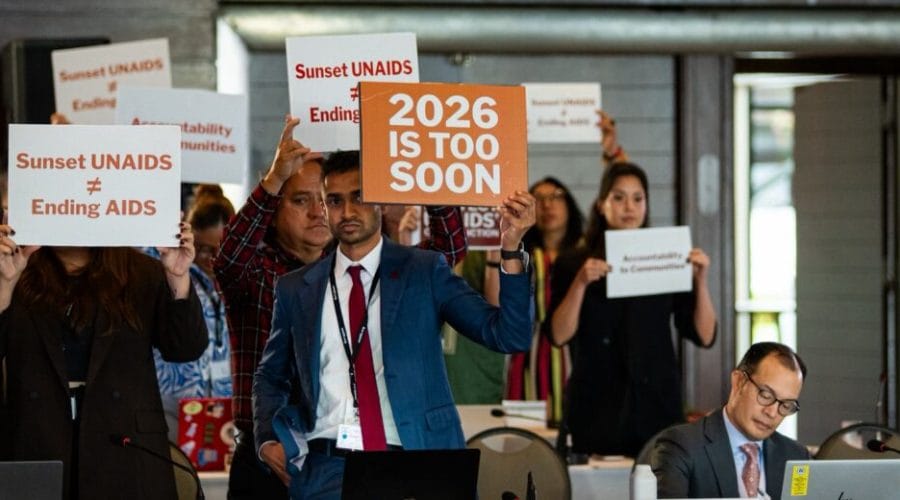
The UNAIDS PCB NGO Delegation has submitted its Formal Position on the Future of UNAIDS to the PCB Working Group on the Future of UNAIDS.
As the Working Group moves towards its final recommendations, the Delegation is calling on civil society organizations, community networks and advocates from every region to endorse the position and add their voices to this collective call for a strong, coordinated and community-led UN response to HIV.
Over the past year, communities and civil society have continued to make their voices heard in discussions about the future of UNAIDS. The Delegation’s position builds on this engagement and sets out what must be protected and strengthened through the transition—including a strong central UN role on HIV, effective coordination across the Joint Programme, and the formal and meaningful participation and leadership of people living with and affected by HIV, communities and civil society.
The decisions being made now will shape the global HIV response for years to come. By endorsing this position, your organization can stand with communities in calling for a future that protects the gains of the HIV response and keeps community leadership at its centre.
The Delegation will present the endorsements received during the second Multistakeholder Consultation convened by the PCB Working Group, expected to take place in the last week of September 2026 (dates to be confirmed).
Add your organization’s voice: [ENDORSE THE POSITION →]
Formal Position of the NGO Delegation to the UNAIDS Programme Coordinating Board on the Future of UNAIDS
A year ago, following publication of the UN80 report, more than one thousand community and civil society organizations from every region endorsed the NGO Delegation’s statement opposing the premature sunset of UNAIDS. Their voices sent a strong message that people living with and affected by HIV, and organizations on the frontlines of the pandemic, were not prepared to see the Joint Programme dismantled while the HIV response remains unfinished.
Since then, we have continued to mobilize and to play a key part in shaping discussions about what should come next. Reflecting the longstanding leadership and activism of communities and civil society in the HIV response, our inputs have played a key role in changing the language. We secured meetings with the UN Deputy Secretary General Ms Amina Mohamed, and in these, helped to move the conversation away from the sunset of UNAIDS and towards its transformation. Working with our networks of people living with and affected by HIV and with wider civil society, the NGO Delegation has continued to engage through discussions at PCB57 and 58, meetings with UNAIDS leadership and Cosponsors, and consultations with partners during AIDS 2026. Just as we have done since the earliest cases of AIDS, communities came together around a shared concern, stayed engaged as the discussion evolved, and remain determined to shape upcoming and critical decisions around what the future should look like.
Today there is clear recognition that the UN mandate on HIV must continue, that a central entity is still needed for leadership and coordination, and that the unique role of people living with and affected by HIV and of wider communities and civil society within the Joint Programme should be preserved. The Working Group’s interim report reflects these important shifts. Yet several of the key concerns raised by communities and civil society and by implementing countries throughout the process are not yet resolved.
The NGO delegation, as the ECOSOC-mandated mechanism through which people living with HIV and wider communities and civil society shape the governance of the Joint Programme, is therefore writing to the Working Group as it prepares its final recommendations, to make our position clear.
- Of the four Directions set out in the interim report, we support Direction 1 as the strongest basis for future UN action on AIDS, with a smaller and more focused Secretariat that can provide the core functions of global leadership, coordination and accountability while more fully harnessing the leadership of communities, Cosponsors, Member States, and other partners. We recognize that UNAIDS needs to change, but that change should leverage the influence and impact the Joint Programme has built up over more than two decades, and avoid downgrading UN joint action on HIV to a new and unknown partnership without the recognition that is needed to support the HIV response at this critical time.
- We believe the four core functions of leadership and advocacy, convening and coordination, accountability through data, targets and strategy, and community engagement should remain together within a central entity. These functions work together to drive progress against the Global AIDS Strategy, and separating them across different UN agencies will create gaps and undermine the Joint Programme’s ability to meet global HIV targets. The Working Group has also recognized that these functions are interrelated and should be preserved.
- We support a stronger role for Cosponsors, building on their mandates, technical expertise and presence in countries, without dividing the four core functions among different agencies. Greater responsibility for Cosponsors should happen within a Joint Programme that is effectively coordinated, with clear roles and a central entity that can bring the different parts of the response together. The Joint Programme must also develop a culture and mechanisms for collective accountability, that ensures that all parties are delivering on the core functions and playing their part in meeting global HIV targets, whatever level they are working at.
- We want the ECOSOC mandate and the governance arrangements that give people living with HIV, those affected by and most at risk of HIV, including key population, other priority populations and civil society a formal role in decision making to be protected. This is one of the things that has made UNAIDS so impactful within the UN system and it must be held up and strengthened as a model of what UN reform should look like, rather than being negotiated away through the transition. In addition, in a strengthened joint programme, community participation must also go beyond governance, through a model where communities are meaningfully involved as co-leaders and co-creators in priority setting, implementation, monitoring and accountability in national, regional and global structures. To be truly meaningful, this role needs to be institutionalised and remunerated at each of these levels, with UN actors held accountable for supporting this.
- We believe the transition should be carefully planned, with enough time, clear steps and accountability throughout the process. The Working Group has already recognized that closing the UNAIDS Secretariat at the end of 2026 would not be realistic or advisable. Changes to the institutional structure should not create gaps in support to countries and communities when the HIV response is already facing serious financial and political pressure.
The decisions being made in the coming months will shape the UN response to HIV for years to come. Communities have been the co-creators of the HIV response since its beginning, and their leadership must remain central as the global health development ecosystem undergoes further reforms. This is essential to ensure that the UN response continues to support community leadership and remains aligned with the ECOSOC resolution on joint programs, as well as the Political Declaration on ending HIV and AIDS.
We invite civil society organizations, community networks and advocates from every region to endorse this position ahead of the October PCB Special Session. By coming together again, we can send a clear message to the Working Group, its Co Facilitators, Member States, Cosponsors and UN leadership about what communities expect from the future of UNAIDS.
Signed,
The UNAIDS PCB NGO Delegation
Posición formal de la Delegación de ONG ante la Junta Coordinadora del Programa de ONUSIDA sobre el futuro de ONUSIDA
Hace un año, tras la publicación del informe UN80, más de mil organizaciones comunitarias y de la sociedad civil de todas las regiones respaldaron la declaración de la Delegación de ONG en oposición al cierre prematuro de ONUSIDA. Sus voces enviaron un mensaje contundente: las personas que viven con VIH y las personas afectadas por el VIH, así como las organizaciones que se encuentran en la primera línea de respuesta a la pandemia, no estaban dispuestas a ver desmantelado el Programa Conjunto mientras la respuesta al VIH siga inconclusa.
Desde entonces, hemos seguido movilizándonos y desempeñando un papel clave en la configuración de los debates sobre lo que debe venir después. Como reflejo del liderazgo y activismo de larga trayectoria de las comunidades y la sociedad civil en la respuesta al VIH, nuestros aportes han desempeñado un papel clave en el cambio del lenguaje. Logramos reuniones con la Vicesecretaria General de las Naciones Unidas, Sra. Amina Mohammed, y en ellas contribuimos a que la conversación dejara de centrarse en el cierre de ONUSIDA y pasara a enfocarse en su transformación. Trabajando con nuestras redes de personas que viven con VIH y personas afectadas por el VIH, así como con la sociedad civil en general, la Delegación de ONG ha continuado participando a través de los debates en las reuniones 57 y 58 de la JCP, reuniones con el liderazgo de ONUSIDA y los Copatrocinadores, y consultas con socios durante AIDS 2026. Tal como lo hemos hecho desde los primeros casos de sida, las comunidades se unieron en torno a una preocupación compartida, mantuvieron su participación a medida que evolucionaba el debate y siguen decididas a incidir en las próximas decisiones cruciales sobre cómo debe ser el futuro.
Hoy existe un claro reconocimiento de que el mandato de las Naciones Unidas sobre el VIH debe continuar, que sigue siendo necesaria una entidad central para el liderazgo y la coordinación, y que debe preservarse el papel único de las personas que viven con VIH y las personas afectadas por el VIH, así como de las comunidades y la sociedad civil en general, dentro del Programa Conjunto. El informe provisional del Grupo de Trabajo refleja estos importantes cambios. Sin embargo, varias de las principales preocupaciones planteadas por las comunidades y la sociedad civil, así como por los países implementadores a lo largo del proceso, aún no se han resuelto.
Por lo tanto, la Delegación de ONG, como mecanismo establecido por mandato del ECOSOC mediante el cual las personas que viven con VIH y las comunidades y la sociedad civil en general participan en la gobernanza del Programa Conjunto, se dirige al Grupo de Trabajo mientras este prepara sus recomendaciones finales, con el fin de dejar clara nuestra posición.
- De las cuatro Direcciones establecidas en el informe provisional, apoyamos la Dirección 1 como la base más sólida para la futura acción de las Naciones Unidas sobre el sida, con una Secretaría más pequeña y enfocada que pueda cumplir las funciones esenciales de liderazgo mundial, coordinación y rendición de cuentas, aprovechando al mismo tiempo de manera más plena el liderazgo de las comunidades, los Copatrocinadores, los Estados Miembros y otros socios. Reconocemos que ONUSIDA necesita cambiar, pero ese cambio debe aprovechar la influencia y el impacto que el Programa Conjunto ha construido durante más de dos décadas, y evitar reducir la acción conjunta de las Naciones Unidas sobre el VIH a una alianza nueva y desconocida que no cuente con el reconocimiento necesario para apoyar la respuesta al VIH en este momento crítico.
- Consideramos que las cuatro funciones esenciales de liderazgo e incidencia, convocatoria y coordinación, rendición de cuentas mediante datos, metas y estrategia, y participación comunitaria deben permanecer juntas dentro de una entidad central. Estas funciones trabajan de manera conjunta para impulsar los avances hacia el cumplimiento de la Estrategia Mundial contra el Sida, y separarlas entre diferentes agencias de las Naciones Unidas generará brechas y debilitará la capacidad del Programa Conjunto para alcanzar las metas mundiales sobre el VIH. El Grupo de Trabajo también ha reconocido que estas funciones están interrelacionadas y deben preservarse.
- Apoyamos un papel más sólido para los Copatrocinadores, basado en sus mandatos, experiencia técnica y presencia en los países, sin dividir las cuatro funciones esenciales entre diferentes agencias. Una mayor responsabilidad de los Copatrocinadores debe darse dentro de un Programa Conjunto que esté coordinado de manera efectiva, con funciones claras y una entidad central capaz de articular las distintas partes de la respuesta. El Programa Conjunto también debe desarrollar una cultura y mecanismos de rendición de cuentas colectiva que garanticen que todas las partes estén cumpliendo con las funciones esenciales y desempeñando el papel que les corresponde para alcanzar las metas mundiales sobre el VIH, independientemente del nivel en el que trabajen.
- Queremos que se protejan el mandato del ECOSOC y los mecanismos de gobernanza que otorgan a las personas que viven con VIH, a las personas afectadas por el VIH y a quienes se encuentran en mayor riesgo de adquirirlo, incluidas las poblaciones clave, otras poblaciones prioritarias y la sociedad civil, un papel formal en la toma de decisiones. Este es uno de los elementos que ha hecho que ONUSIDA tenga tanto impacto dentro del sistema de las Naciones Unidas y debe ser defendido y fortalecido como un modelo de cómo debe ser la reforma de las Naciones Unidas, en lugar de ser objeto de negociación y perderse durante la transición. Además, en un Programa Conjunto fortalecido, la participación comunitaria también debe ir más allá de la gobernanza, mediante un modelo en el que las comunidades participen de manera significativa como colíderes y cocreadoras en la definición de prioridades, la implementación, el monitoreo y la rendición de cuentas en las estructuras nacionales, regionales y mundiales. Para que este papel sea verdaderamente significativo, debe institucionalizarse y ser remunerado en cada uno de estos niveles, y los actores de las Naciones Unidas deben rendir cuentas por el apoyo brindado para hacerlo posible.
- Consideramos que la transición debe planificarse cuidadosamente, con tiempo suficiente, pasos claros y rendición de cuentas a lo largo de todo el proceso. El Grupo de Trabajo ya ha reconocido que cerrar la Secretaría de ONUSIDA a finales de 2026 no sería realista ni aconsejable. Los cambios en la estructura institucional no deben generar brechas en el apoyo a los países y las comunidades en un momento en que la respuesta al VIH ya enfrenta fuertes presiones financieras y políticas.
Las decisiones que se adopten en los próximos meses definirán la respuesta de las Naciones Unidas al VIH durante los próximos años. Las comunidades han sido cocreadoras de la respuesta al VIH desde sus inicios, y su liderazgo debe seguir siendo central a medida que el ecosistema mundial de salud y desarrollo atraviesa nuevas reformas. Esto es esencial para garantizar que la respuesta de las Naciones Unidas continúe apoyando el liderazgo comunitario y se mantenga alineada con la resolución del ECOSOC sobre los programas conjuntos, así como con la Declaración Política sobre el fin del VIH y el sida.
Invitamos a las organizaciones de la sociedad civil, las redes comunitarias y activistas de todas las regiones a respaldar esta posición antes de la Sesión Especial de la JCP de octubre. Al unirnos nuevamente, podemos enviar un mensaje claro al Grupo de Trabajo, a sus Cofacilitadores, a los Estados Miembros, a los Copatrocinadores y al liderazgo de las Naciones Unidas sobre lo que las comunidades esperan del futuro de ONUSIDA.
Firmado,
La Delegación de ONG ante la JCP de ONUSIDA