
I was 23 when I was diagnosed with HIV in Istanbul, and I remember thinking it was the end of my life. Not because of the virus itself, but because of everything I didn’t know. I didn’t understand what living with HIV meant, what treatment looked like, or what my future could be. Like many people, I went online looking for answers, trying to make sense of it all.
That’s when I came across HIV i-Base. For the first time, things started to feel clear. The information was honest, detailed, but also human. It didn’t talk down to me, and it didn’t scare me. It helped me slowly rebuild a sense of control over my life. But there was one problem: it was only available in English.
And that matters more than we sometimes realise.
For many people living with HIV in Turkey, just like in many other places, accessing reliable, understandable information is not straightforward. Language becomes a barrier not just to knowledge, but to confidence, decision-making, and even hope. If you can’t fully understand what is happening in your body, how can you feel in control of it?
This question has been sitting with me for years, and it’s also what shaped the work we started through OurCARE (Our Community Action for Research and Empowerment). We’re a small, youth-led organisation based in Zurich, and a big part of what we do is try to make complex health information more accessible and more human. Sometimes that looks like podcasts, sometimes like storytelling, and sometimes, like in this case, it looks like translation, but not in the traditional sense.
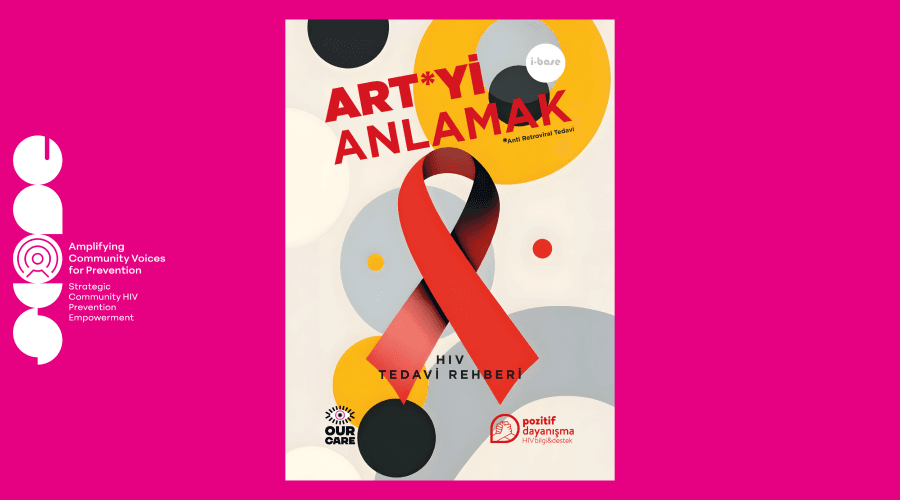
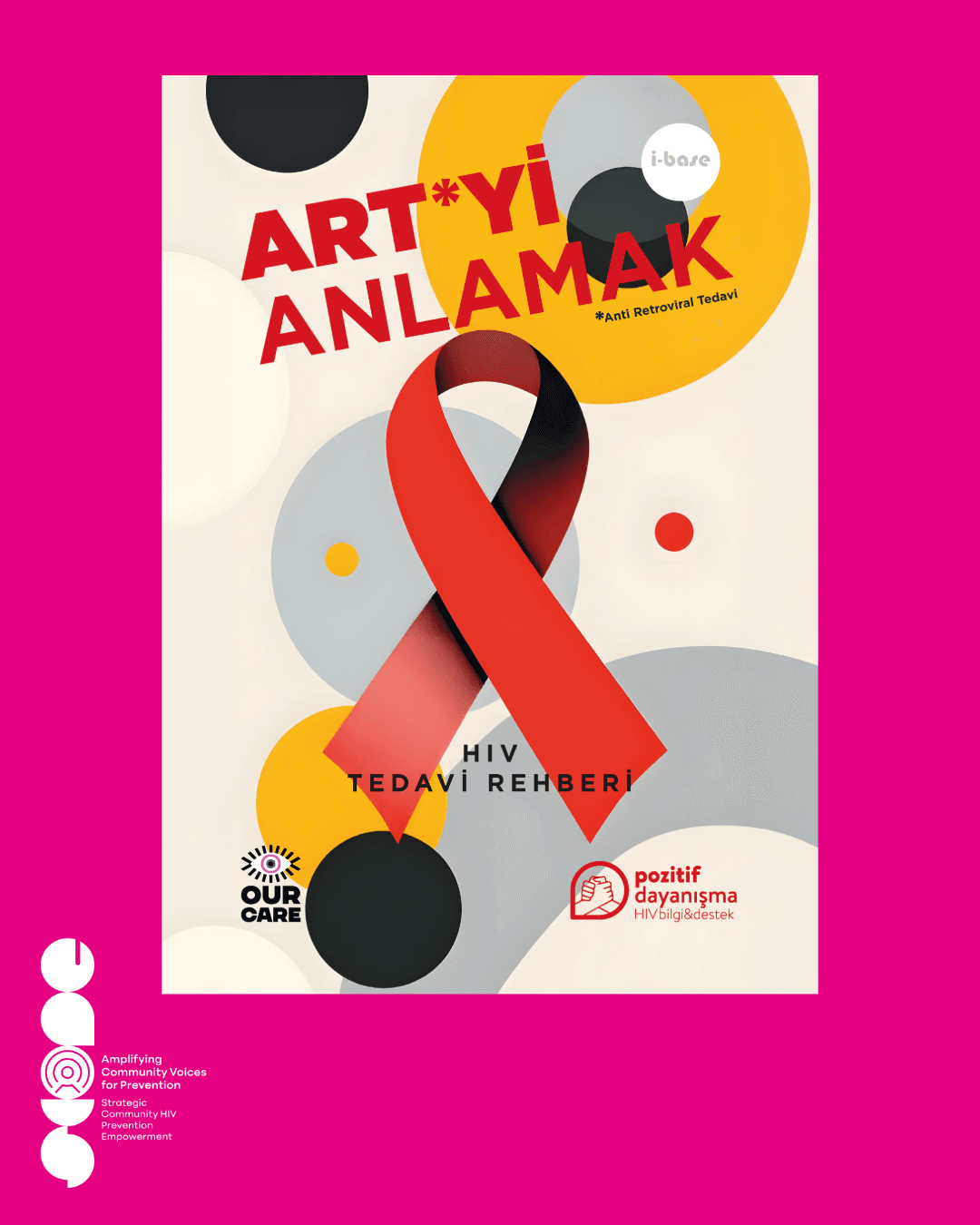
As part of the European AIDS Treatment Group (EATG) SCOPE project, we worked on translating and adapting the ART in Pictures resource by HIV i-Base into Turkish. But very quickly, it became clear that this wasn’t just about translating words. It was about translating meaning. Because in HIV, language carries a lot. It carries fear, stigma, medical complexity, and also reassurance, clarity, and empowerment. So, we didn’t just translate the text. We slowed things down, simplified where needed, added explanations, and included questions that people actually ask after diagnosis, the kind of questions that don’t always appear in clinical spaces, but come up in real life. While doing so, we ensured the knowledge was both culturally sensitive and thoughtfully localized, so it could genuinely reflect and respond to the needs of local communities.
And we didn’t do this alone. We worked closely with Pozitif Dayanışma (Positive Solidarity), a community initiative based in Ankara that supports people living with HIV. Their involvement shaped the project in a very real way. They reviewed the content, gave feedback, and sometimes pushed us to rethink how something was being said. What sounds clear on paper doesn’t always land the same way in real life, and their input helped make sure the resource felt grounded, relatable, and actually useful. That’s where cultural sensitivity and meaningful engagement with local communities became essential, and this was successfully achieved through close collaboration with Pozitif Dayanışma.
That part of the process mattered just as much as the translation itself.
Because information that isn’t understood isn’t really accessible. And information that doesn’t reflect people’s realities often doesn’t reach them at all.
You can access the original ART in Pictures resource by i-base in English here and our Turkish translation here.
What this project also reminded me is how uneven access to knowledge still is, even in places where we often assume information is widely available. HIV science has moved forward in incredible ways, treatment is effective, as people living with HIV we can live long and healthy lives, and we know that undetectable equals untransmittable. But these realities don’t automatically translate into everyday understanding. There’s still a gap between what is known in science and what is felt and believed in people’s lives.
Language sits right in the middle of that gap. Access to accurate, reliable, evidence-based, and non-judgmental information in one’s native language is a fundamental human right.
Making this resource available in Turkish, both online and through discreet formats like QR-coded cards distributed in testing centres and community spaces, felt like a small but meaningful step in closing it. Not a solution to everything, but a reminder that access doesn’t just happen. It has to be created, shaped, and sometimes reworked from the ground up.
And for me, this is also personal.
I still think about that version of myself at 23, confused, overwhelmed, and trying to find something to hold on to. If I had access to this kind of information in my own language back then, maybe things would have felt a little less heavy, a little less isolating.
That’s why this work matters to me.
Not as a technical task, but as something rooted in care, solidarity, and the belief that everyone deserves to understand what is happening in their body, in a language that feels like their own.
Ozla Nuh
OurCARE (https://www.ourcare.ch/)
You can find the materials on the side/bottom widget of this page.
EATG’s SCOPE project aims to strengthen the skills and knowledge of community health workers, advocates and researchers in the field of HIV combination prevention. It focuses on communities that are inadequately served by policies and programmes.
The SCOPE project has been developed by the EATG and was made possible through a grant from ViiV Healthcare Europe Ltd.

Related Blogs
-
Between Connection and Pressure: Lessons from the International Chemsex Conference
-
SCOPE: Study Trip to Metzineres (Spain) | What Metzineres Taught Me About What I Thought I Already Knew
-
SCOPE: Study Trip to Africa Advocacy Foundation (UK) | Learning Across Borders: What a Visit to London Taught Me About Community-Led HIV Prevention
Get involved
Are you living with HIV/AIDS? Are you part of a community affected by HIV/AIDS and co-infections? Do you work or volunteer in the field? Are you motivated by our cause and interested to support our work?
Subscribe
Stay in the loop and get all the important EATG updates in your inbox with the EATG newsletter. The HIV & co-infections bulletin is your source of handpicked news from the field arriving regularly to your inbox.