
Thessaloniki, Greece is a city at the intersection of multiple health and social inequalities, facing persistent challenges in meeting the needs of vulnerable and underserved populations. These include people who use drugs, LGBTQI+ individuals, sex workers, and migrants -groups disproportionately affected by HIV, hepatitis, housing insecurity, and social marginalisation. Fragmented healthcare services, stigma, inadequate policy frameworks, and limited access to testing and care continue to undermine public health outcomes.
In response, the European-funded CORE project (Community Response to End Inequalities) aims to strengthen community-driven interventions and improve linkage to care for these populations, working closely with community-based and community-led organisations in Thessaloniki.
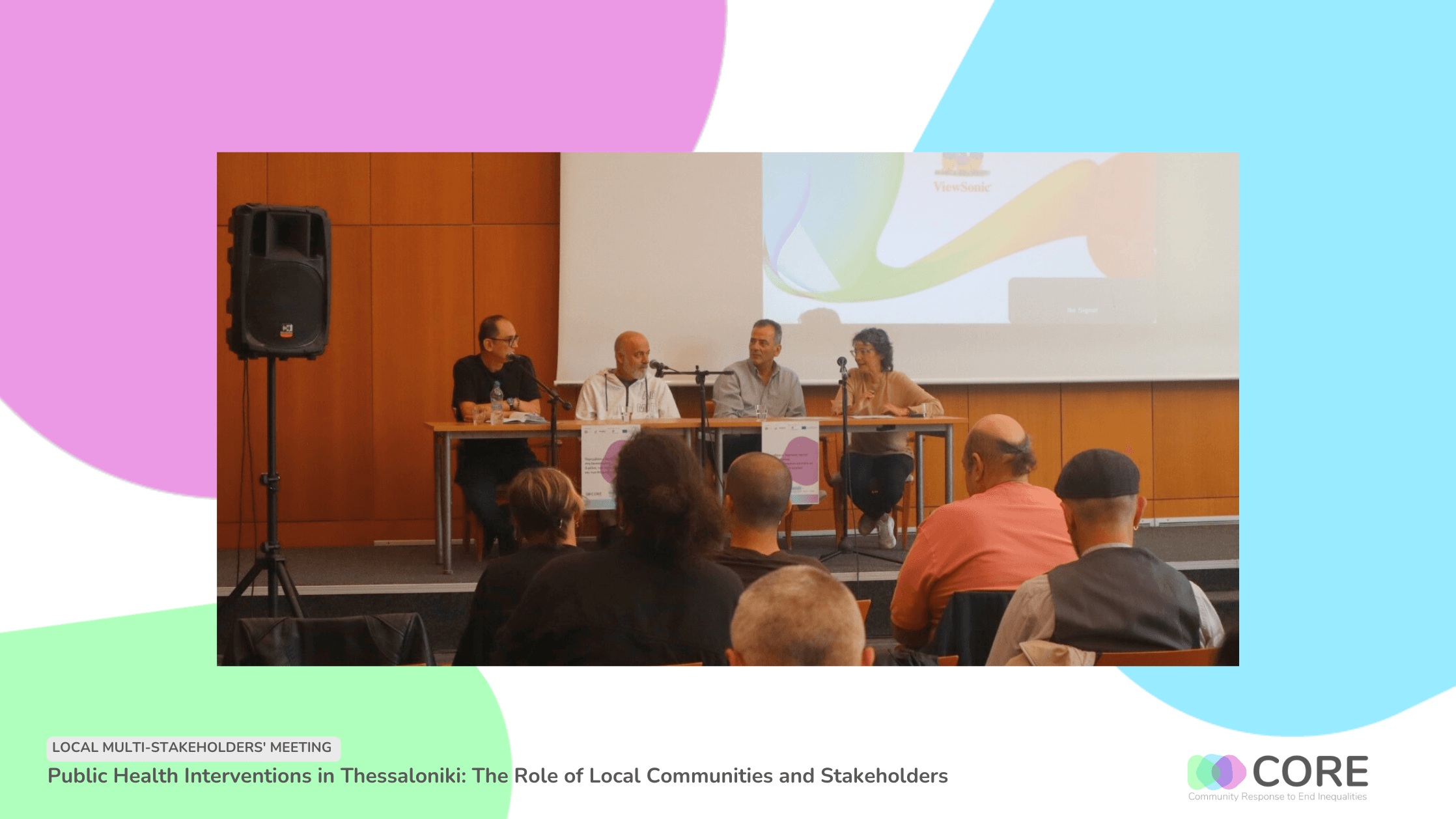
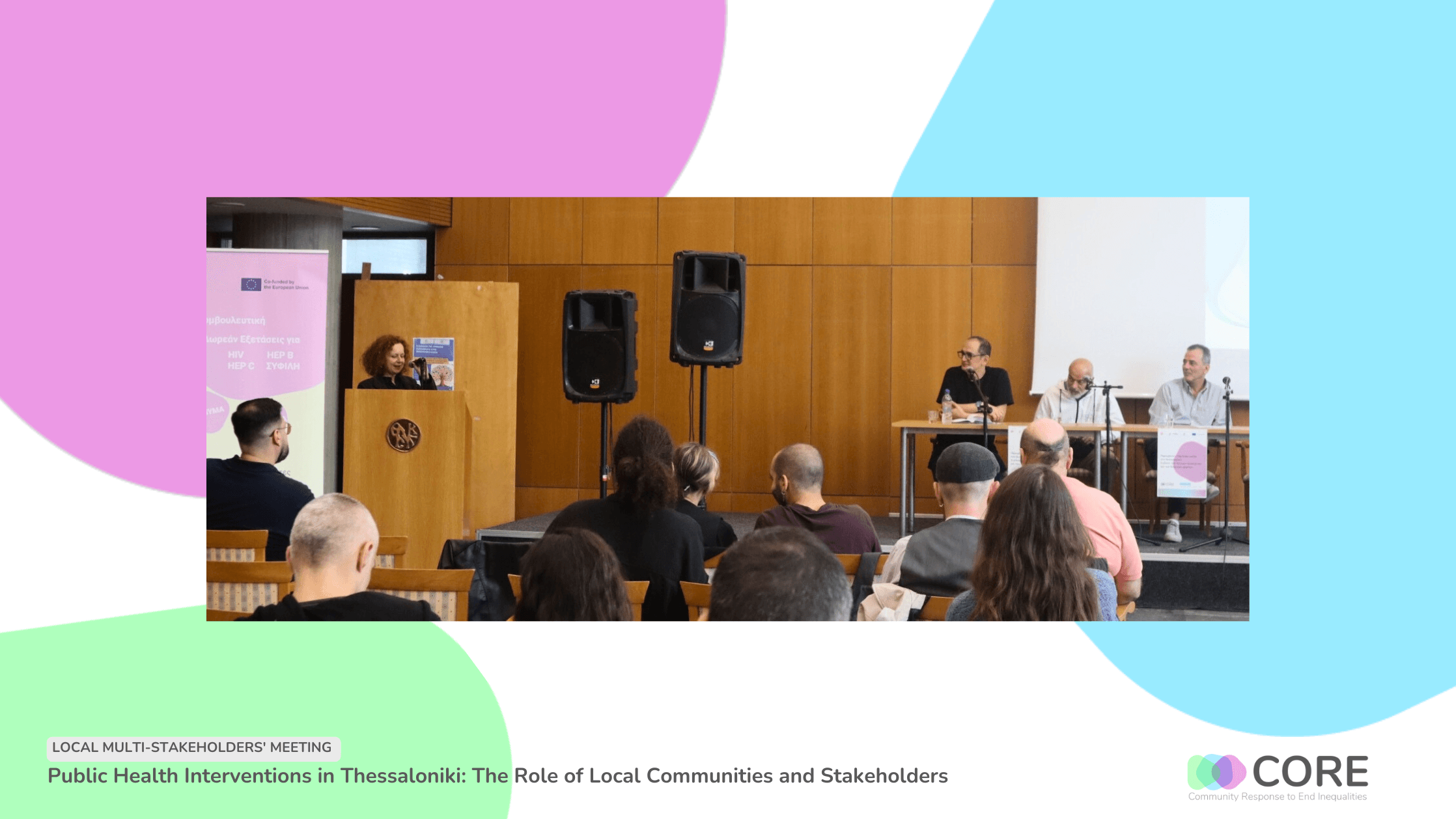
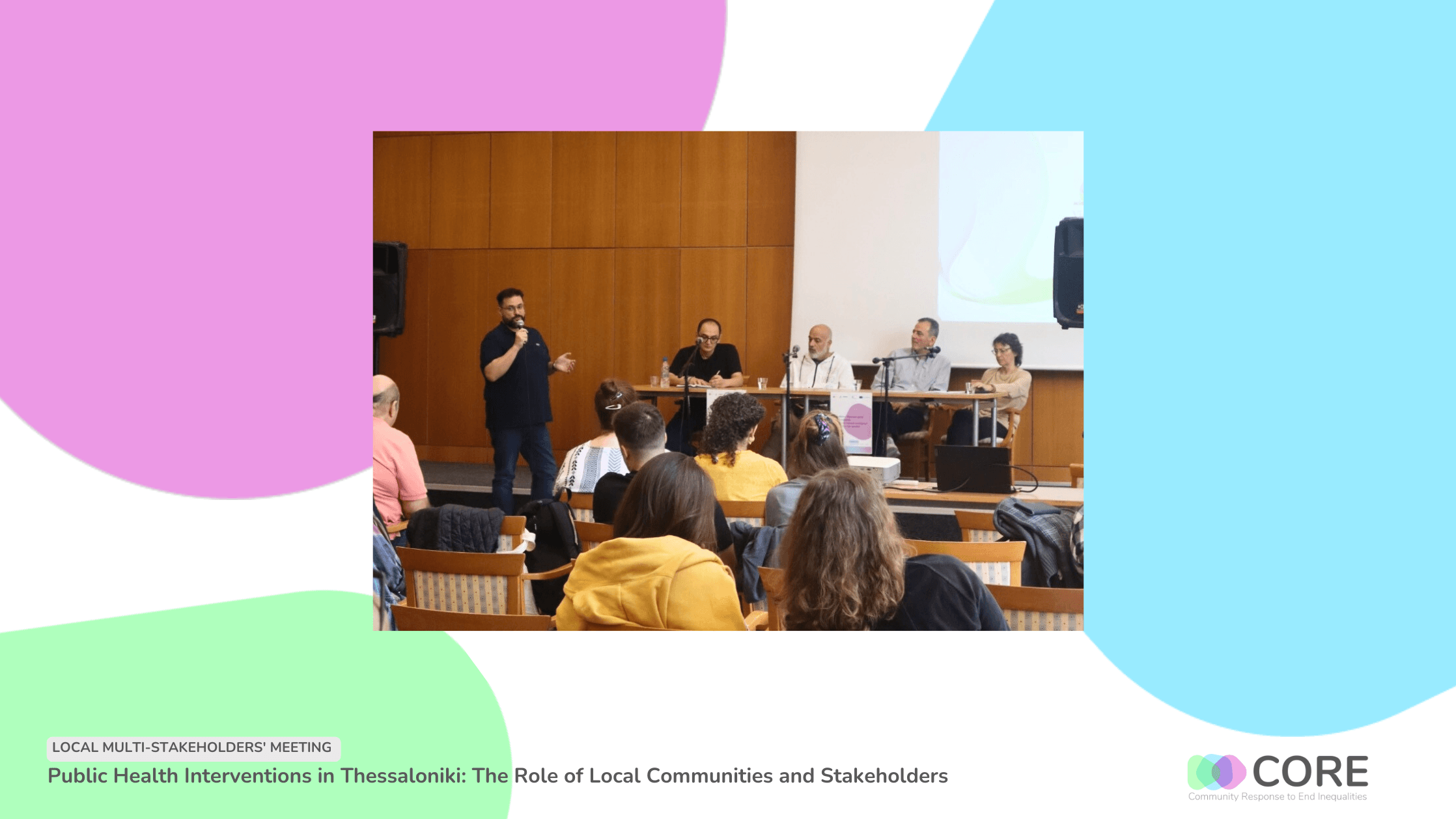
On 29 September 2025, stakeholders convened at Thessaloniki’s City Hall for the local multi-stakeholder meeting “Public Health Interventions in Thessaloniki: The Role of Local Communities and Stakeholders” an initiative under CORE’s Work Package 6 co-organised by Greek partners PRAKSIS and Positive Voice. The event brought together community representatives, experts, and policymakers including Marianella Kloka (Project Manager, PRAKSIS), Giannis Ligdas (EOPAE), Giannis Katsoulis (Municipality of Thessaloniki), Moran Perez (REF CHECKPOINT Positive Voice), Dr. Theofilos Chrysanthidis (AHEPA Hospital), and Thanos Roussos (Doctors of the World).
The discussion, moderated by journalist George Tsitiridis and physician Frosso Tsirogianni, focused on best practices and ongoing challenges in scaling up community-based rapid testing and improving linkage to care for key populations. Participants emphasized the importance of institutionalising free and anonymous testing services, while addressing administrative, legal, and social barriers to healthcare. The meeting also called for a shift in public discourse to reduce stigma and foster inclusive health strategies.
EATG was represented at the event by Apostolos Kalogiannis, Communications Manager, who highlighted the importance of keeping the resources mobilised within the CORE project active, funded, and supported beyond the project’s lifetime to ensure lasting impact.
As the CORE project draws to a close, the Thessaloniki meeting marks a pivotal moment to translate community-level insights into sustainable policy change. With strong local partnerships, scientific backing, and an inclusive engagement model, CORE continues to demonstrate the potential of community-led responses to strengthen public health infrastructure, promote equity, and build trust between marginalised communities and service providers. Ensuring political support and continuity post-programme will be essential to embed these interventions within national health systems and secure long-term impact.
Takeaways from the meeting
Thessaloniki, the second-largest city in Greece, functions as a key urban centre where LGBTQI+ people, people who use drugs, and sex workers live, as well as a critical transit hub for refugees, asylum seekers, and undocumented migrants. Both local partners of the CORE project (Positive Voice and PRAKSIS) have regarded public health interventions in Thessaloniki as an important step towards gaining, regaining, and maintaining key relationships with local communities and stakeholders.
According to scientific data from two recent Greek programmes, Aristotle and Alexander, there was an HIV epidemic outbreak among people who inject drugs during the coronavirus pandemic. In Thessaloniki in particular, 10–12% of all participants in the Aristotle II programme died within a year and a half.
As announced by the Medical School of the University of Athens, the main causes of this mortality rate, which is significantly higher than that of the general population, were overdose, HIV, and cardiovascular diseases, while a large percentage of participants also faced housing insecurity and poverty. Another important finding, according to EODY, is that 53.7% of late HIV presenters are citizens with a migrant or refugee profile, or people who use drugs (or sometimes both).
Given this context, it was important for the organisers to make these realities known, to explain the opportunities provided by the CORE project to scale up testing and linkage to care for the above-mentioned populations, and to address any challenges encountered in this regard.
During the two panel discussions that framed the event, particular emphasis was placed on the following issues:
- The opportunity provided by the European CORE programme to increase the rate of free, rapid, and anonymous testing for HIV, HBV, HCV, and syphilis, as well as counselling within affected communities.
- The scientific reasons why such interventions are necessary in Thessaloniki.
- The synergies created to facilitate the expansion of public health interventions in Thessaloniki, highlighting the role of communities, the National Organisation for Drug Use (EOPAE), and the city of Thessaloniki.
- The obstacles identified in ensuring timely and effective linkage to the National Health System, which are largely administrative, legal, intercultural, social, and political in nature.
- The attention that must be paid to the political discourse expressed in the public sphere when it targets entire communities, thereby fuelling stigma and social isolation, with serious consequences for public health and additional financial burdens on health systems.
- The solutions and ways forward that can be proposed by communities when they are meaningfully involved in the design and implementation of health and social interventions.
- The need to continue, support, and strengthen public health interventions beyond the conclusion of the programme, as the organisations have succeeded in building a framework of trust with the communities.
- The importance of coexistence among the different facets of social life in Thessaloniki and the resolution of arising issues through dialogue, mutual respect, and care.
About the CORE project
The CORE Project (“Community Response to End Inequalities”) aims to reduce inequalities by promoting, strengthening and integrating the community responses that have proven key in bringing services closer to persons who would benefit most but face inadequate access, in particular countries where these responses are still lacking. This will happen through capacity building, networking, and the exchange of good practice and innovative approaches, as well as through a proactive outreach and engagement of relevant stakeholders, while addressing legal, policy, and structural issues to promote integration of these approaches into disease prevention and health promotion strategies and systems.
The CORE project will build on and intensify collaboration of regional networks and national and local organisations of people living with HIV, key populations, and service provider organisations. It will use, adapt, and disseminate existing national, regional, and global good practice approaches and tools from across key populations and disease areas, and provide platforms for exchange.
Read more about the CORE consortium and its plan of action here: https://core-action.eu/core-home.
#COmmunityREsponse
#COREActionEU
#EU4Health
#HealthUnion

The CORE project has received funding from the Health Programme of the European Union under grant agreement No 101080079.
Related News
-
CORE | Resilience in Times of Uncertainty: What We Learned from the CORE Project’s Final Multi Stakeholder Meeting
-
CORE: Local Stakeholders Gather in Paris to Discuss Community-Led Strategies for Inclusive Health and Policy for Sex Workers
-
CORE | Health Equity for Marginalised Voices: EU’s Path Forward: a policy event
Get involved
Are you living with HIV/AIDS? Are you part of a community affected by HIV/AIDS and co-infections? Do you work or volunteer in the field? Are you motivated by our cause and interested to support our work?
Subscribe
Stay in the loop and get all the important EATG updates in your inbox with the EATG newsletter. The HIV & co-infections bulletin is your source of handpicked news from the field arriving regularly to your inbox.