
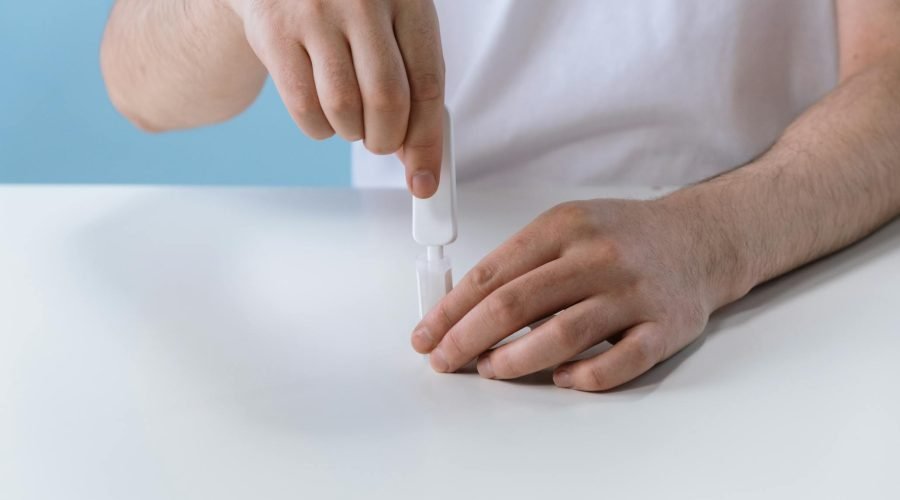
The World Health Organization (WHO) has prequalified the first hepatitis C virus (HCV) self-test which can provide a critical support in expanding access to testing and diagnosis, accelerating global efforts to eliminate hepatitis C.
The product, called OraQuick HCV self-test, manufactured by OraSure Technologies, is an extension of the pre-qualified, OraQuick® HCV Rapid Antibody Test which was initially prequalified by WHO in 2017 for professional use. The self-test version, specifically designed for use by lay users, provides individuals with a single kit containing the components that are needed to perform the self-test.
WHO recommended HCV self-testing (HCVST) in 2021, to complement existing HCV testing services in countries. The recommendation was based on evidence demonstrating its ability to increase access to and uptake of services, particularly among people who may not otherwise test.
National-level HCVST implementation projects, largely supported by Unitaid, have shown high levels of acceptability and feasibility, as well as empowering people through personal choice, autonomy and access to stigma-free self-care services.
“Every day 3500 lives are lost to viral hepatitis. Of the 50 million people living with hepatitis C, only 36% had been diagnosed, and 20% have received curative treatment by the end of 2022,” says Dr Meg Doherty, WHO Director for the Department of Global HIV, Hepatitis and STI Programmes. “The addition of this product to the WHO prequalification list provides a safe and effective way to expand HCV testing and treatment services, ensuring more people receive the diagnoses and treatment they need, and ultimately contributing to the global goal of HCV elimination.”
WHO’s prequalification (PQ) programme for in vitro diagnostics (IVDs) evaluates a range of tests, including those used for the detection of antibodies to HCV. The programme assesses IVDs against quality, safety and performance standards. It is a cornerstone in supporting countries in achieving high-quality diagnosis and treatment monitoring.
“The availability of a WHO prequalified HCV self-test enables low- and middle-income countries have access to safe and affordable self-testing options which is essential to achieving the goal of 90% of all people with HCV to be diagnosed,” says Dr Rogério Gaspar, WHO Director for the Department of Regulation and Prequalification. “This achievement contributes to improving access to quality-assured health products for more people living in low-income countries.”
WHO will continue to assess additional HCV self-tests, support evidence-based implementation, and work with communities to expand available options to all countries.
Source : World Health Organization
Related HIV and Co-Infections News
-
TheBodyPro | What to know about hepatitis B when switching to tenofovir-sparing antiretroviral regimens
-
Bioengineer.org | Short-course antiviral therapy cures acute hepatitis C, but eight weeks may be the floor
-
ECAT urges Otsuka to lower delamanid price and remove barriers to access in EECA countries
Get involved
Are you living with HIV/AIDS? Are you part of a community affected by HIV/AIDS and co-infections? Do you work or volunteer in the field? Are you motivated by our cause and interested to support our work?
Subscribe
Stay in the loop and get all the important EATG updates in your inbox with the EATG newsletter. The HIV & co-infections bulletin is your source of handpicked news from the field arriving regularly to your inbox.