
 Credit: WHO
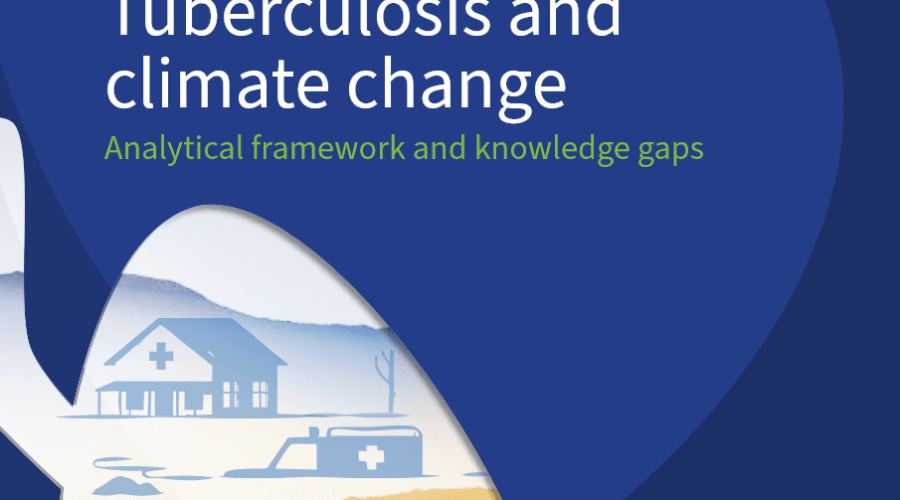
28 May 2025 | GENEVA — The World Health Organization (WHO) is calling for urgent, coordinated action to tackle the dual threats of tuberculosis (TB) and climate change. In a newly released framework, WHO highlights how climate change is creating conditions that could intensify the global TB epidemic.
The framework outlines how rising temperatures, extreme weather events, and environmental degradation are intensifying key TB risk factors. Populations already grappling with poverty, malnutrition, displacement, and limited access to healthcare are expected to be hit hardest, as TB—one of the world’s deadliest infectious diseases—gains ground in a changing climate.
The report highlights three key pathways through which climate change exacerbates TB risk:
- Migration and displacement: Climate-related disasters and slow-onset environmental degradation are forcing millions to relocate, often into overcrowded and poorly ventilated environments that facilitate TB transmission and situations that reduce their access to care. In 2023, 20.3 million people were displaced by weather-related hazards, with projections estimating up to 216 million climate-displaced persons by 2050.
- Food and water insecurity: Increasing frequency of droughts, floods, and extreme heat is intensifying malnutrition—an established risk factor for TB contributing to nearly 10% of TB cases globally.
- Health system disruptions: Climate-induced disasters are undermining health infrastructure and disrupting essential TB services, including diagnosis, treatment, and continuity of care. Natural hazard-related events affected an estimated 93.1 million people in 2023. Without treatment, TB has a mortality rate of upto 50%.
“Climate change is not only a planetary crisis — it’s a major health threat,” said Dr. Tereza Kasaeva, Director of WHO’s Global Programme on TB & Lung Health. “TB remains the world’s top infectious killer, and climate change threatens to reverse decades of progress in fighting this disease. We must integrate the TB response into climate adaptation efforts to protect the most vulnerable.”
The report urges governments to:
- Integrate TB services into climate and health strategies
- Strengthen health systems to withstand climate shocks
- Secure sustainable financing for TB, including through climate and health funds.
- It also stresses the need for cross-sector collaboration across health, agriculture, migration, social protection, and disaster preparedness to confront the shared drivers of TB and climate vulnerability.
With the UN Climate Change Conference on the horizon, WHO emphasizes that building climate-resilient health systems and including TB in universal health coverage and social protection plans will be essential to safeguarding global health gains and minimizing emerging risks.
WHO’s Global Programme on Tuberculosis and Lung Health (GTB) is collaborating with Member States and key stakeholders to advance a TB response that is resilient in the face of climate change. In partnership with the Pan American Health Organization and Brazil’s Ministry of Health, WHO’s GTB co-hosted a side event on “Climate Change and TB” alongside the G20 Health Working Group meeting in Natal, Brazil, on 2–3 September 2024. The event aimed to raise awareness among G20 members, donors, and technical partners about the current and projected impacts of climate change on the TB epidemic and emphasized the importance of coordinated action across and beyond the health sector. WHO and the Government of Brazil also co-organized a high-level side event on TB and climate change during the 79th Session of the United Nations General Assembly. Held on 23 September 2024, the event focused on the urgent need to combat climate change and its severe consequences on global efforts to end TB.
For more TB updates, check out the TB CAB Weekly Newsletter (Issue #18, 1 June 2025).
The newsletter is brought to you by the Global TB Community Advisory Board (TB CAB) with the support of Treatment Action Group (TAG) and EATG. Subscribe to the newsletter here.
Source : World Health Organization
Related HIV and Co-Infections News
-
The Lancet Regional Health – Europe: Europe’s failure to deliver on drug-resistant TB
-
[AIDS 2026] aidsmap: Returning to HIV care does not erase the effects of treatment interruption, studies show
-
[Press release] Akagera Medicines reports positive first-in-human data for single-ascending-dose of AKG-100, advancing a potentially transformative long-acting therapeutic for drug-resistant TB
Get involved
Are you living with HIV/AIDS? Are you part of a community affected by HIV/AIDS and co-infections? Do you work or volunteer in the field? Are you motivated by our cause and interested to support our work?
Subscribe
Stay in the loop and get all the important EATG updates in your inbox with the EATG newsletter. The HIV & co-infections bulletin is your source of handpicked news from the field arriving regularly to your inbox.