

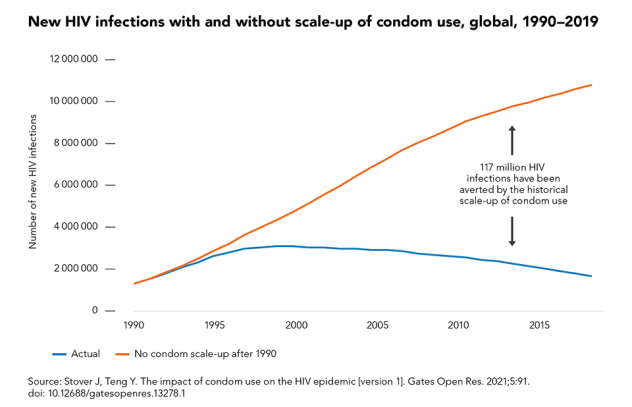
When used correctly and consistently, male and female condoms and lubricant offer very high protection against HIV, sexually transmitted infections and unintended pregnancy. Condom use has had an enormous impact on the global AIDS pandemic: model simulations show that increased condom use since 1990 has averted an estimated 117 million new HIV infections, close to half (47%) of them in sub-Saharan Africa and more than one third (37%) in Asia and the Pacific.
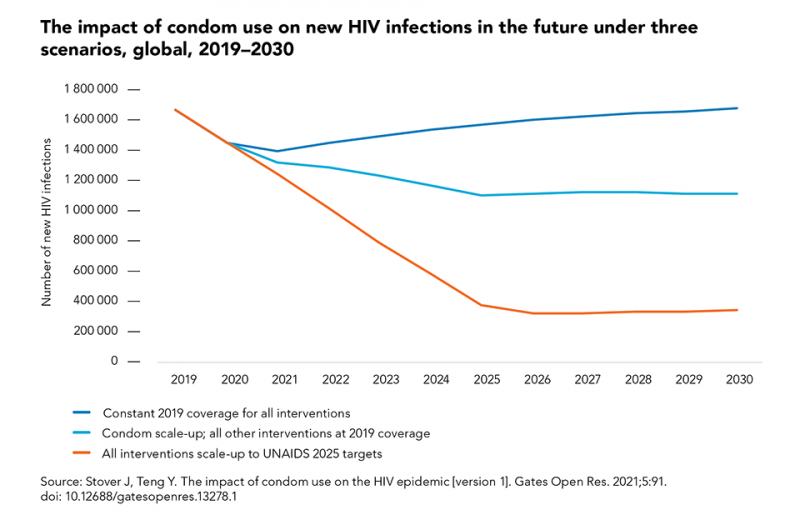
If condom use rates are increased to reach 95% coverage of higher-risk sex acts by 2025 and all other prevention interventions remain at 2019 coverage levels, about one third of the required reductions in new HIV infections will be achieved. Consistent condom use, although possible, has proved difficult to achieve among all populations. Women in many countries, for example, need greater agency and support to negotiate consistent condom use. Where available, some people also choose other HIV prevention methods. Condoms alone, therefore, are not sufficient to control HIV epidemics. Full achievement of the 2025 prevention target of reducing annual new HIV infections to under 370 000 requires increased investment in combination HIV prevention to ensure access to and use of condoms as well as the full range of other prevention choices for 95% of people at risk of HIV infection.
Source : UNAIDS
Related HIV and Co-Infections News
-
Liverpool School of Tropical Medicine: Researchers call for increased screening for parasitic disease linked to HIV and cervical cancer risk
-
UNC School of Medicine: Scoping review highlights wide variation in how PrEP “persistence” is defined, complicating HIV prevention policy and research
-
AIDS Action Europe: Report on access to PrEP in Europe, 2026
Get involved
Are you living with HIV/AIDS? Are you part of a community affected by HIV/AIDS and co-infections? Do you work or volunteer in the field? Are you motivated by our cause and interested to support our work?
Subscribe
Stay in the loop and get all the important EATG updates in your inbox with the EATG newsletter. The HIV & co-infections bulletin is your source of handpicked news from the field arriving regularly to your inbox.