
Bioengineer.org news story
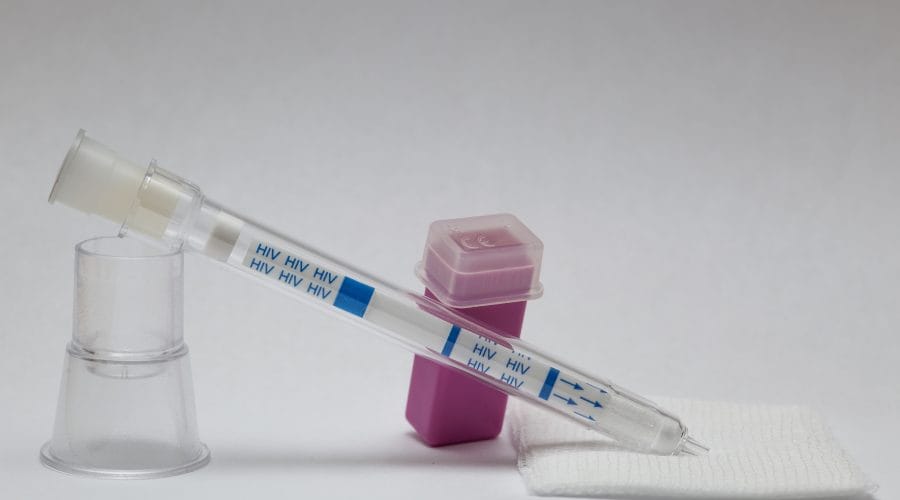
More than a decade after the World Health Organization (WHO) recommended HIV self-testing as a way to reach people conventional services were failing, a new analysis in PLOS Medicine argues that the technology’s promise has been squandered on a global scale. Writing in the journal, Reuben Granich and colleagues reconstruct what happened after 2016, when WHO gave its formal endorsement to a simple idea: let people test themselves for HIV in private, with an oral fluid swab or finger-prick blood test, and then connect to care if the result is reactive. The verdict is stark. Self-testing was deployed at negligible scale for roughly ten years, and the diagnostic gap it was designed to close has narrowed mainly through conventional facility-based and outreach testing instead.
The scale of the original problem is worth recalling. In 2015, a survey-based analysis across 16 countries in sub-Saharan Africa estimated that nearly half of people living with HIV in those countries did not know their status. Extrapolated across the region, that implied roughly 11 million people standing entirely outside the treatment cascade, unaware they needed antiretroviral therapy and capable of onward transmission at rates far higher than people whose infection was suppressed by medication. Self-testing, the authors contend, was precisely the technology positioned to reach this population, because it removed many of the barriers that keep people away from clinics: stigma, distance, waiting times, fear of being seen entering an HIV service, and the loss of a day’s income.
Read the full news story here.
Source : Bioengineer.org
Related HIV and Co-Infections News
Get involved
Are you living with HIV/AIDS? Are you part of a community affected by HIV/AIDS and co-infections? Do you work or volunteer in the field? Are you motivated by our cause and interested to support our work?
Subscribe
Stay in the loop and get all the important EATG updates in your inbox with the EATG newsletter. The HIV & co-infections bulletin is your source of handpicked news from the field arriving regularly to your inbox.