
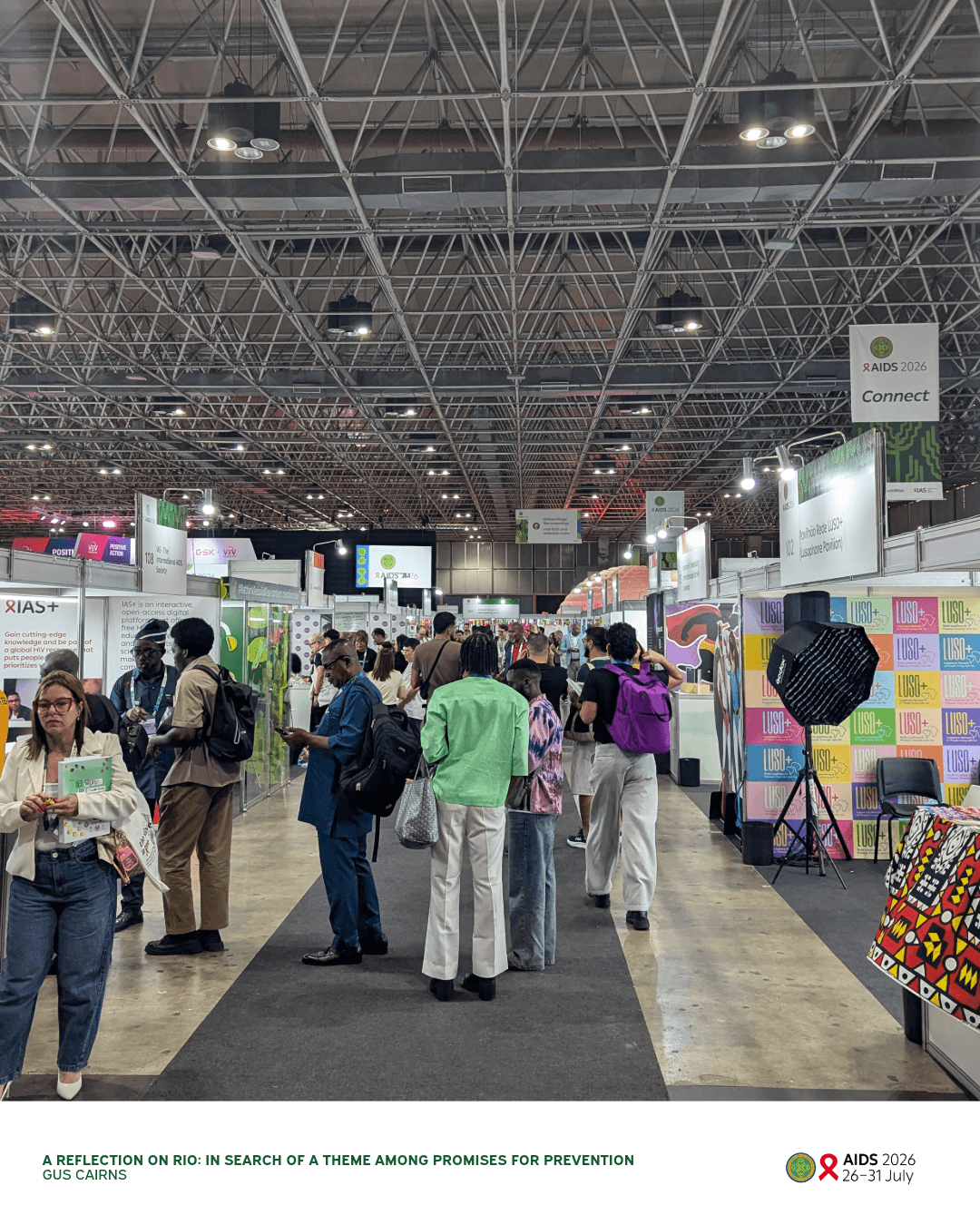
AIDS2026 in Rio felt too big to me. I don’t mean too big in terms of numbers: the conference attracted 7500 people, less than a third as many as in Toronto 20 years ago. I mean too big to grasp, too big to make sense of it all, to find a theme.
I often feel this way at the big biennial AIDS conferences; I think it’s the nature of my work. What I’m paid to do usually is to report, generally for Aidsmap. I’m there to be a witness, not an activist or deal-maker, and most of my time is spent shuffling between sessions and the press room. It means I fail to catch, sometimes, the temperature and targets of the activism.
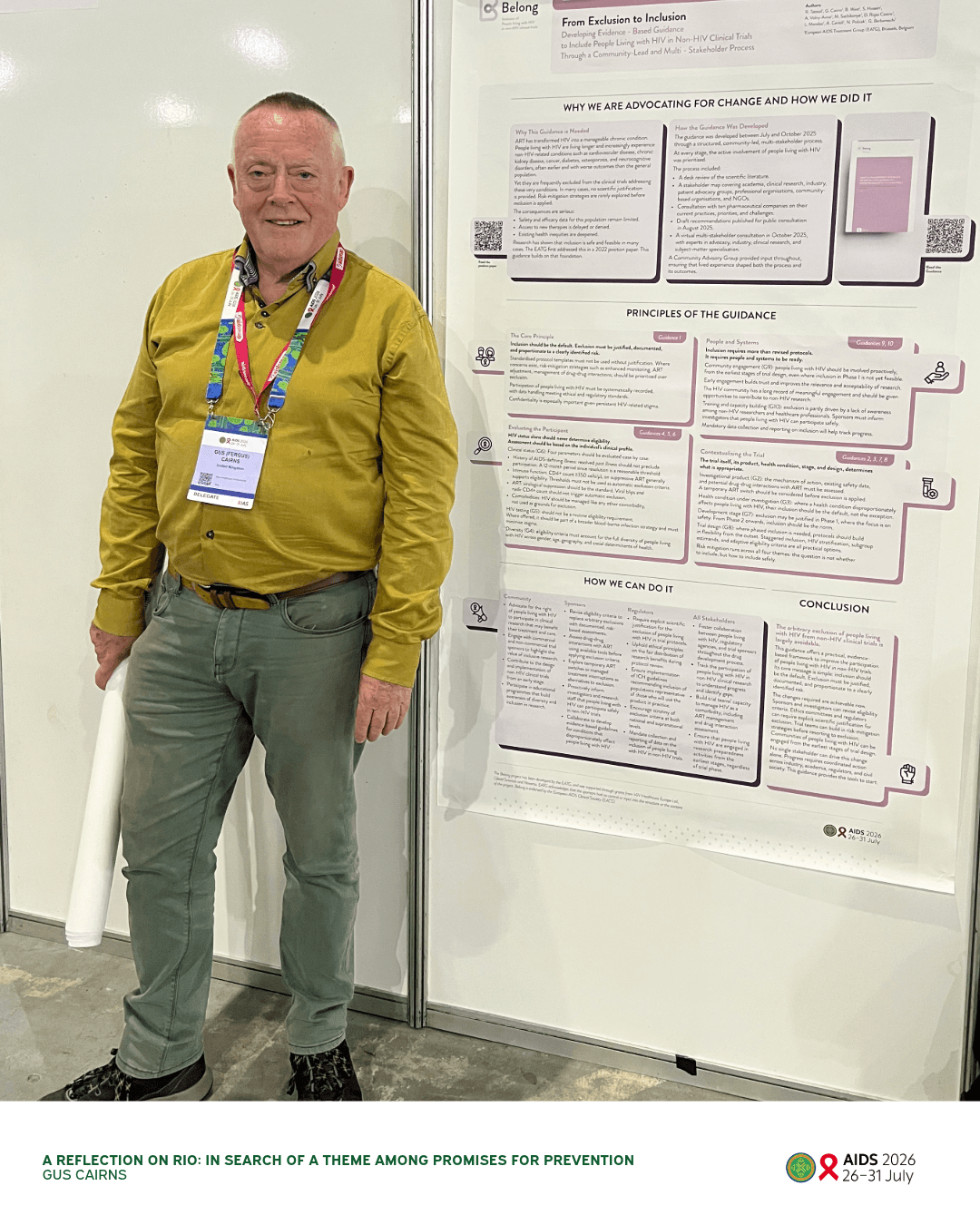
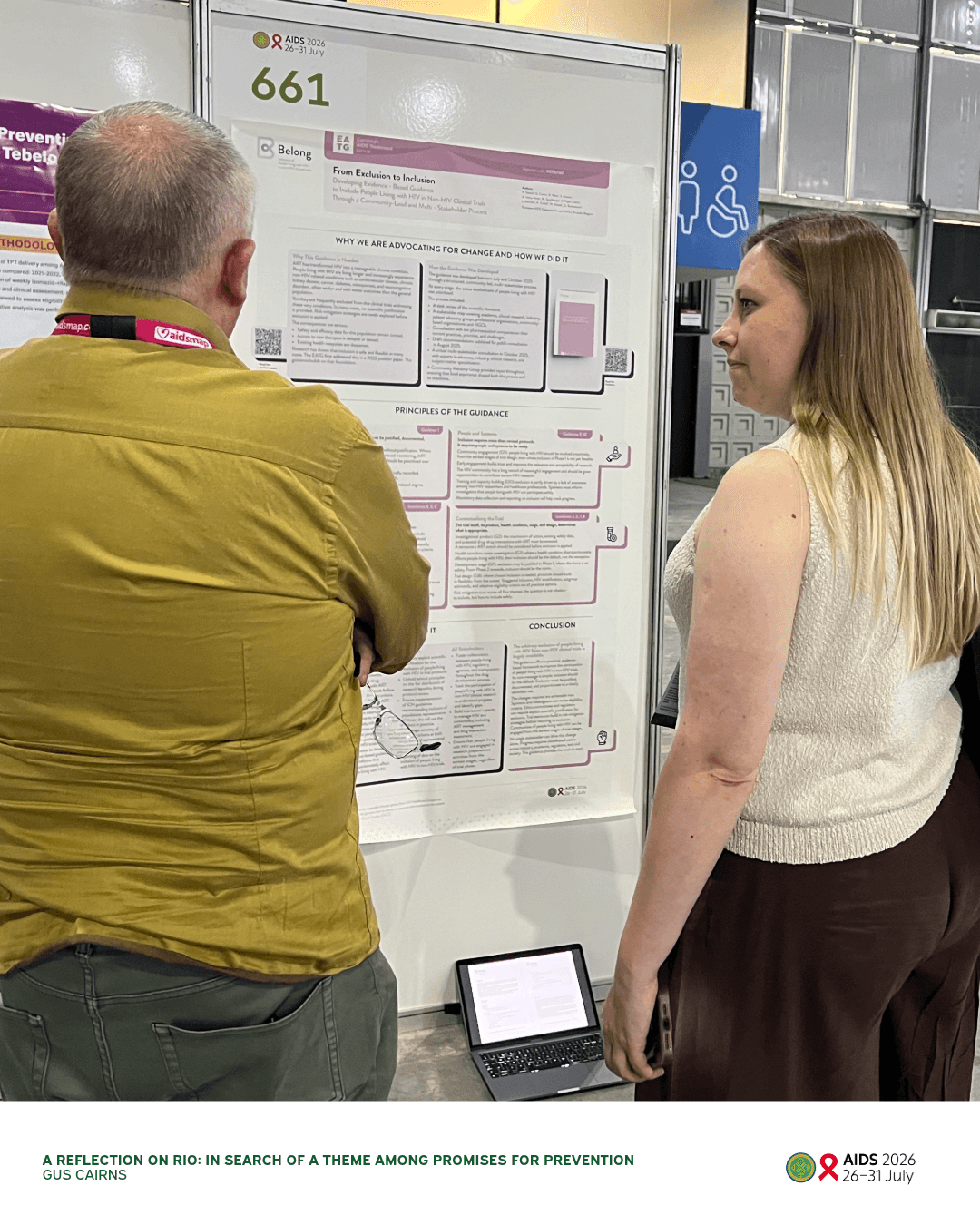
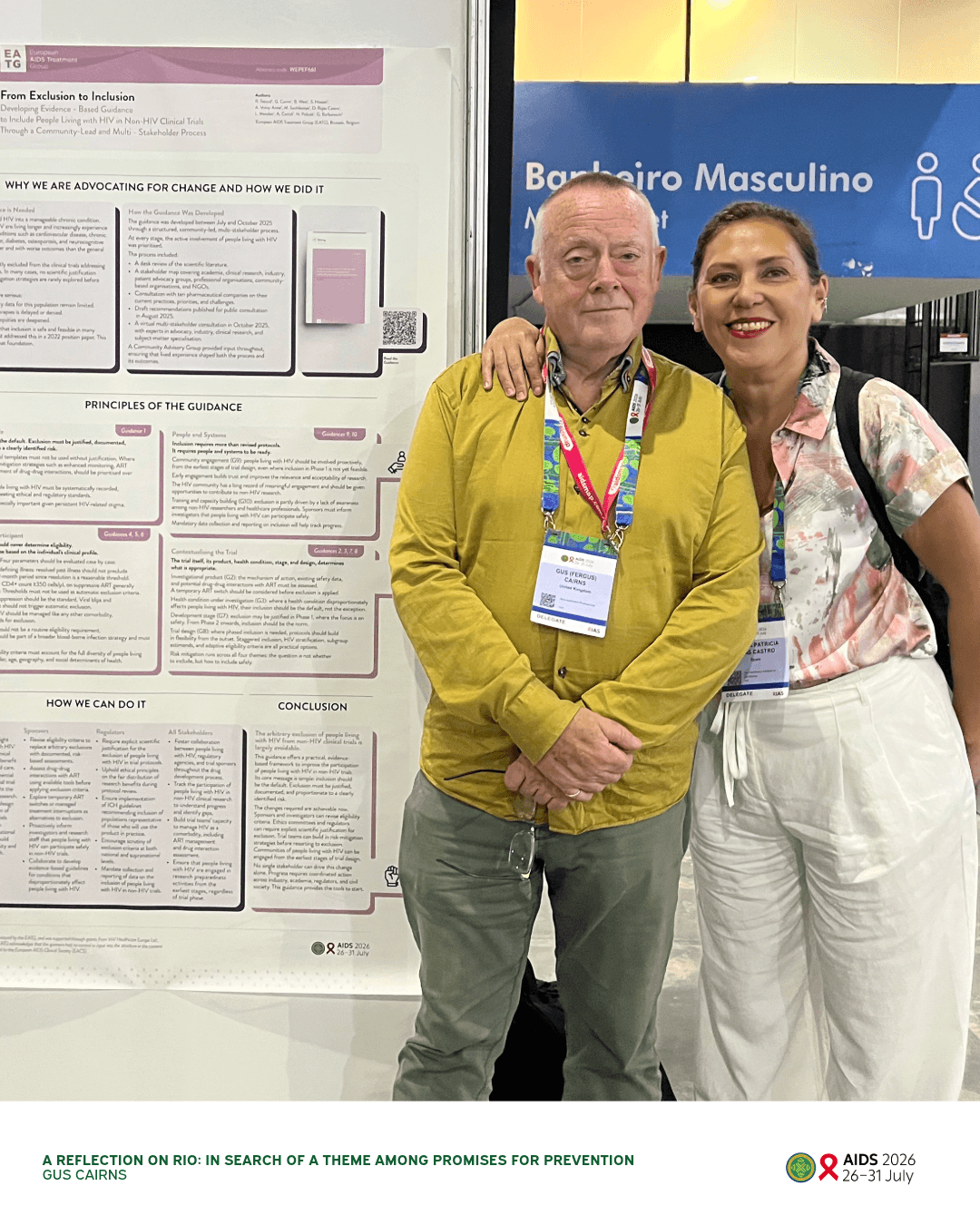
I did drop in on the Silver Zone, EATG’s prime activity at the Global Village, but it seemed to be busy, active and not urgently in need of my presence. I stood dutifully by the Belong poster and had several interesting conversations, for instance with my poster neighbour, a nurse working for shorter-term and more tolerable TB prophylaxis for people with HIV in Botswana.
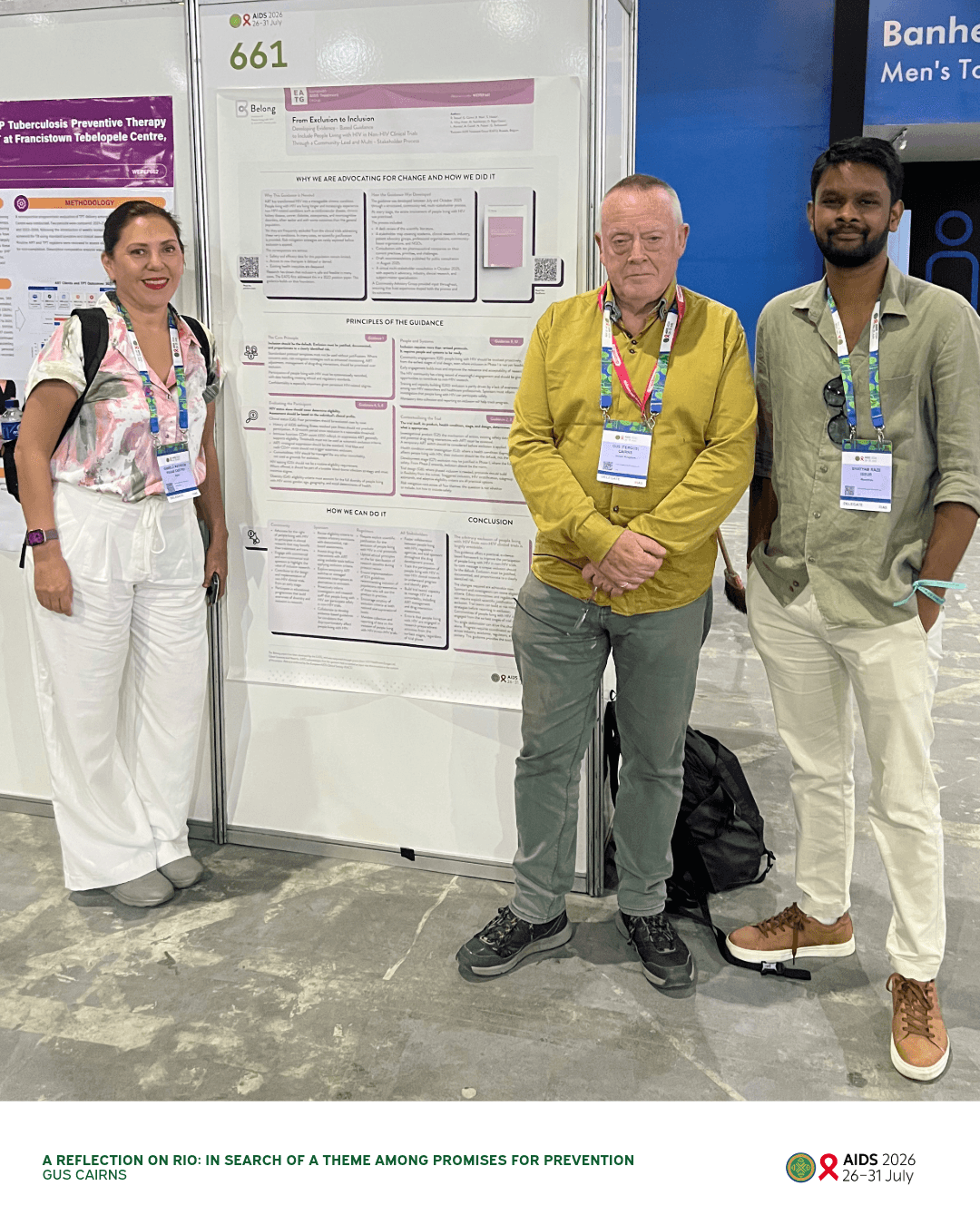
I have managed to combine the networking and the reporting parts of these conferences better in the past. I’ve even managed to find a theme in some cases. I found it in Amsterdam in 2018, when everyone was talking about U=U, for instance. But there’s always been hope and optimism somewhere.
There was hope and optimism at AIDS2026 too. In the blue-sky-science corner, there were a couple more HIV cures, but they involved stem-cell transplants, and one of the recipients nearly died from their cure therapy.
But one of the originators of broadly neutralising antibody (bnAb) therapy, Michel Nussenzweig, gave a perfectly pitched plenary talk on two groundbreaking studies, one called RIO (its principal co-investigator Sarah Fidler showed a slide called ‘RIO at Rio,’ of course) and the other called MCA-1031. Researchers found common immune signatures in trial participants who’d received bnAbs in those studies and came out being able to spend months, and in a few cases years, without having to restart ART.

“We finally understand what we have to do,” Nussenzweig said. He didn’t mean there was a cure, or even a hypothetical one, but that at least cure scientists were converging on a single strategy, rather than relying on guesswork.
The big question is not whether researchers like Nussenzweig and Fidler can get enough funding to do exploratory studies, but whether the world will be willing to provide the money for a cure for all, regardless of who they are and where they’re from.
That question dominated the conference. My failure to find a theme was based on a feeling that all the busy research and science was pointless if the global will to apply it was missing.
I felt Global AIDS was still in shock from the Trump administration cuts at the start of last year and was failing to fully recognise that we weren’t going to get that funding back. Not just from America, but given that Europe has also cut its HIV funding too, not from anywhere, at least not on the same scale as before.
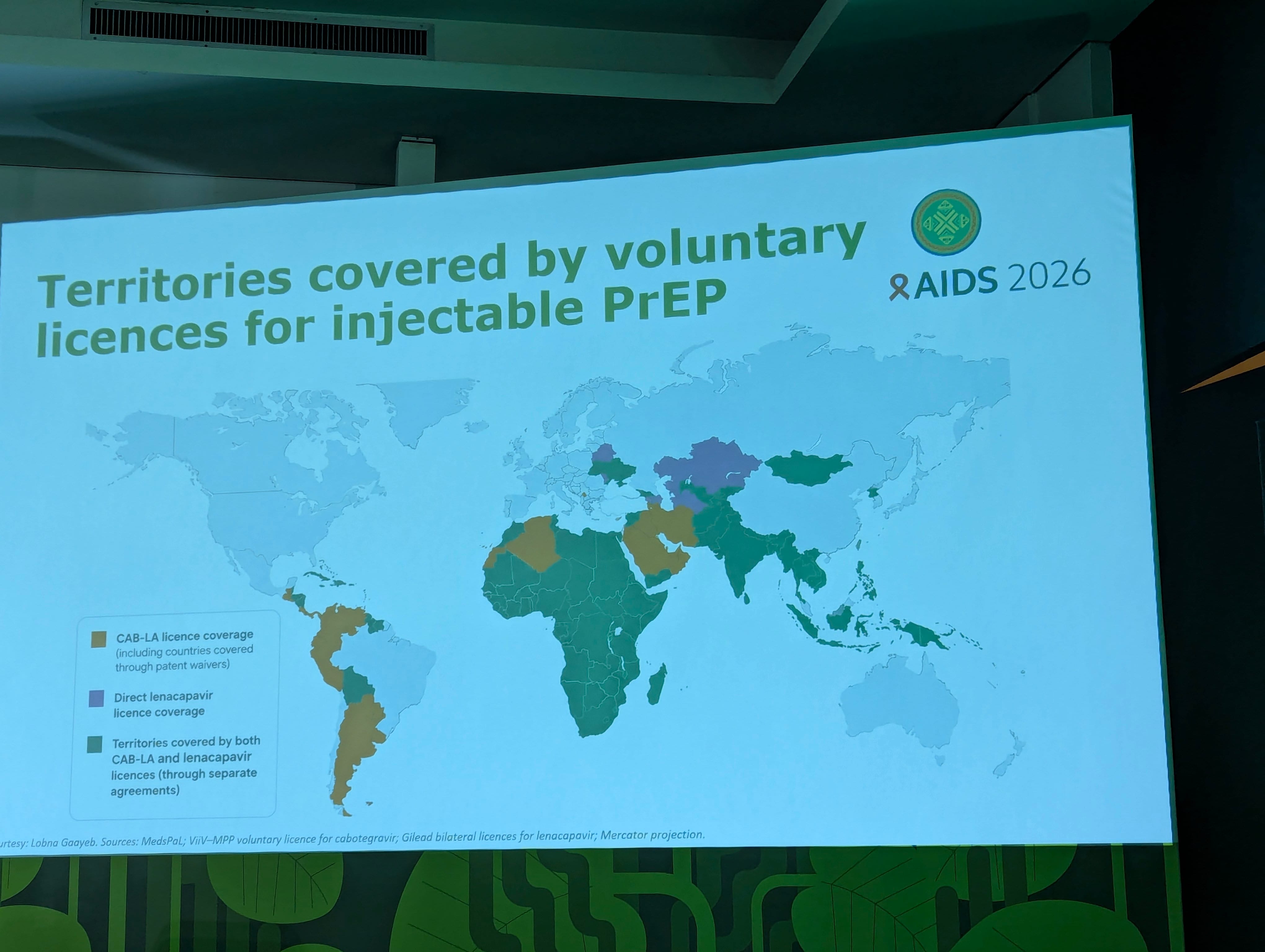
People had a sense of this, but no complete answers. There was more despair and confusion around than hope and optimism. Protests against the pricing of the long-acting injectable drug, Gilead’s lenacapavir, were expected at the opening ceremony, but carried on all week. I felt Gilead were shaken by them. It was beginning to look like the business model for injectables was shaky too. Would governments and private funders be willing to pay more for them than cheap pills, no matter how effective they were? Had the cost of the extra appointments and training been fully accounted for? And why has the take-up been so slow in high-income countries?
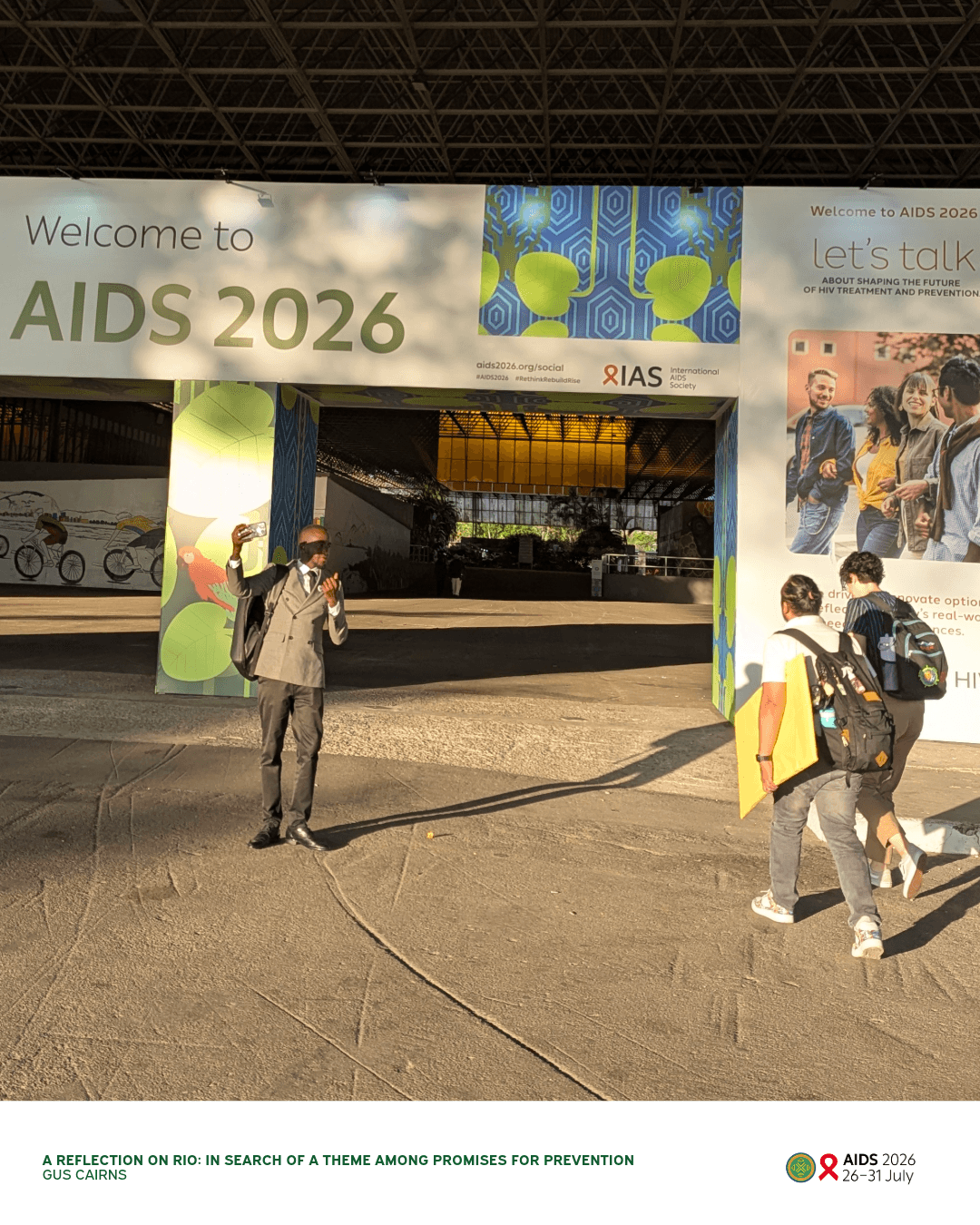
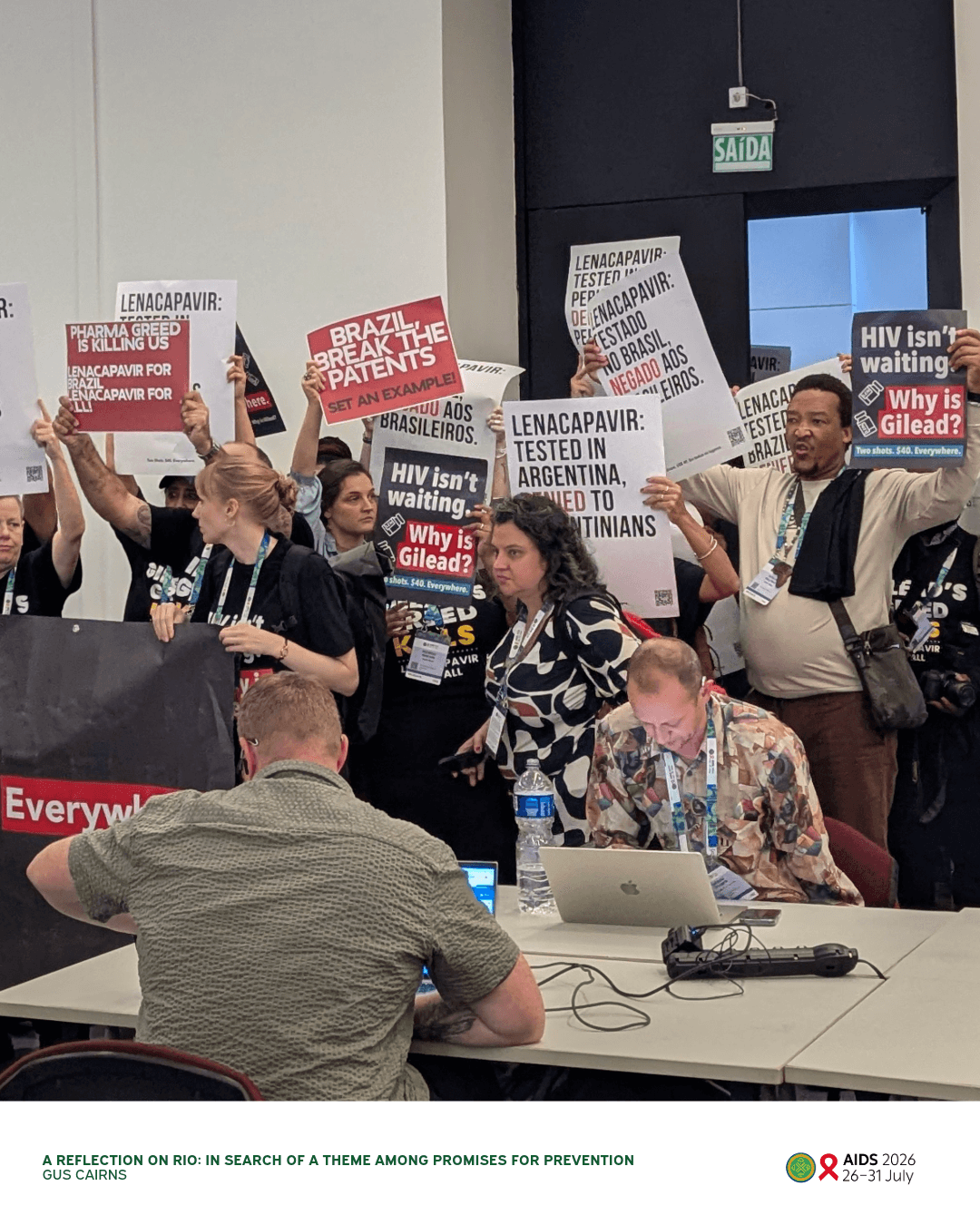
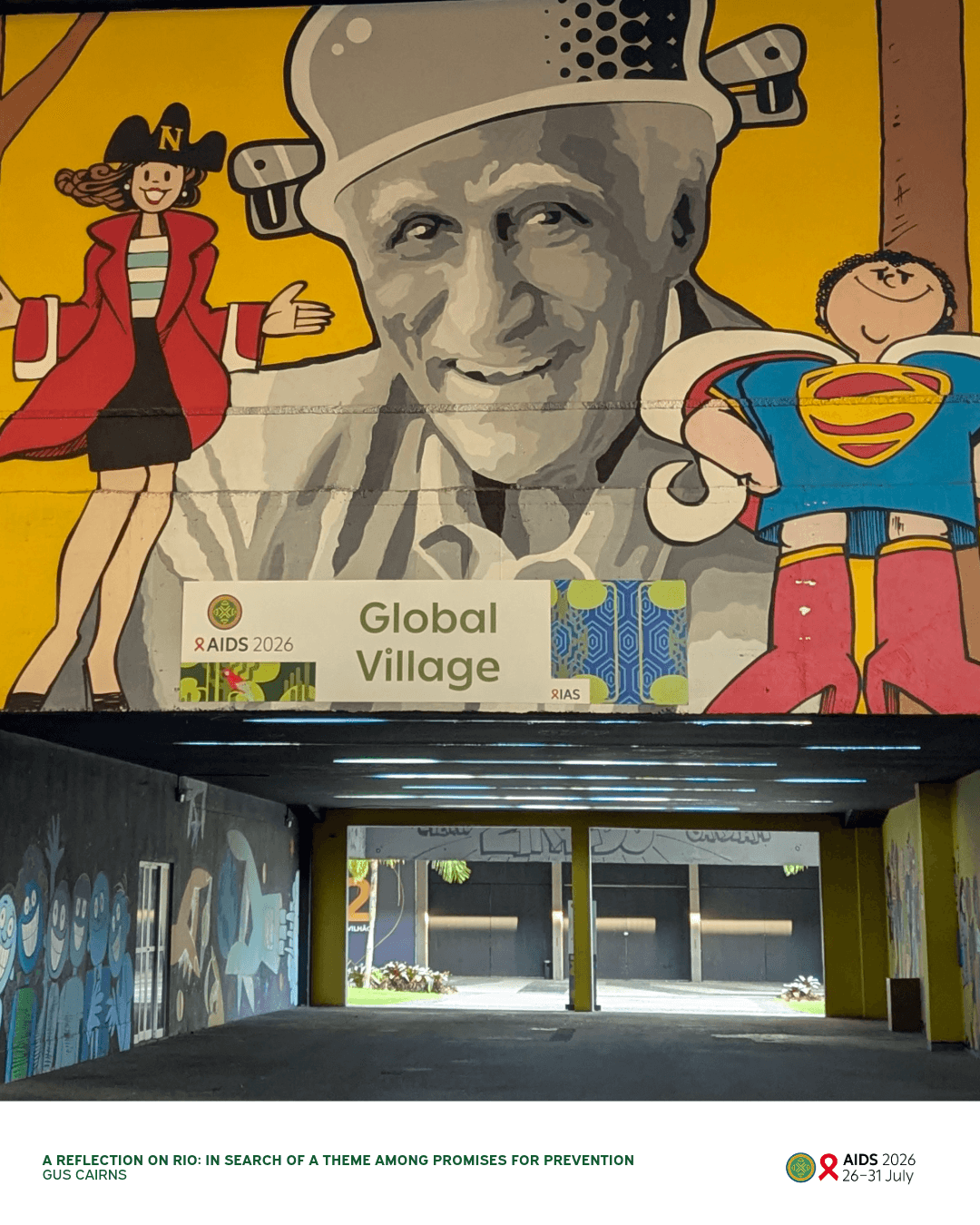
On the way back from Rio, I found myself on the same plane as Dr Tristan Barber, Chair of the British HIV Association. What did he think was the biggest story at Rio? “Alimatravir,” he said, without hesitation.
Two days before the conference, Merck/MSD announced that this, their once-a-month pill, would be made available via voluntary licensing deals in 129 countries, even before the phase III EXPrESSIVE studies were complete.
They did a couple of other things long demanded by activists too. They would develop this drug exclusively for PrEP (leaving the door open for once weekly islatravir/lenacapavir -or a future Merck capsid inhibitor- for treatment). And they gave a strong indication that they would price alimatravir, a drug known to be cheap to make, to undercut the injectables. Early protests that this would exclude Brazil itself, and other higher-middle-income countries, were met with reassurances that it would be cheap there too.
Alimatravir fills another gap in prevention, too. The first conference day featured a satellite session on that neglected cousin of HIV PrEP – PEP (post-exposure prophylaxis) or ‘the HIV morning-after pill’.
The lack of convincing data from randomised trials has meant that PEP remains in most guidelines as a four-week course of three drugs – almost certainly unnecessary, when a three-day regimen of four PrEP pills works.
Now we have the possibility of single-pill PEP, the satellite looked at practicable trial designs that would prove or disprove alimatravir’s efficacy. This would fill a much-needed gap in HIV prevention for cases of occasional or unexpected exposure, including sexual assault. It could also be a ‘gateway intervention’ for people who really need PrEP.


The fact that the city of São Paulo has already successfully pioneered the introduction of PrEP vending machines in metro stations shows that people are ready for it – and in a survey, though only 12% of vending machine users were women, 70% said they used the pills as PEP.
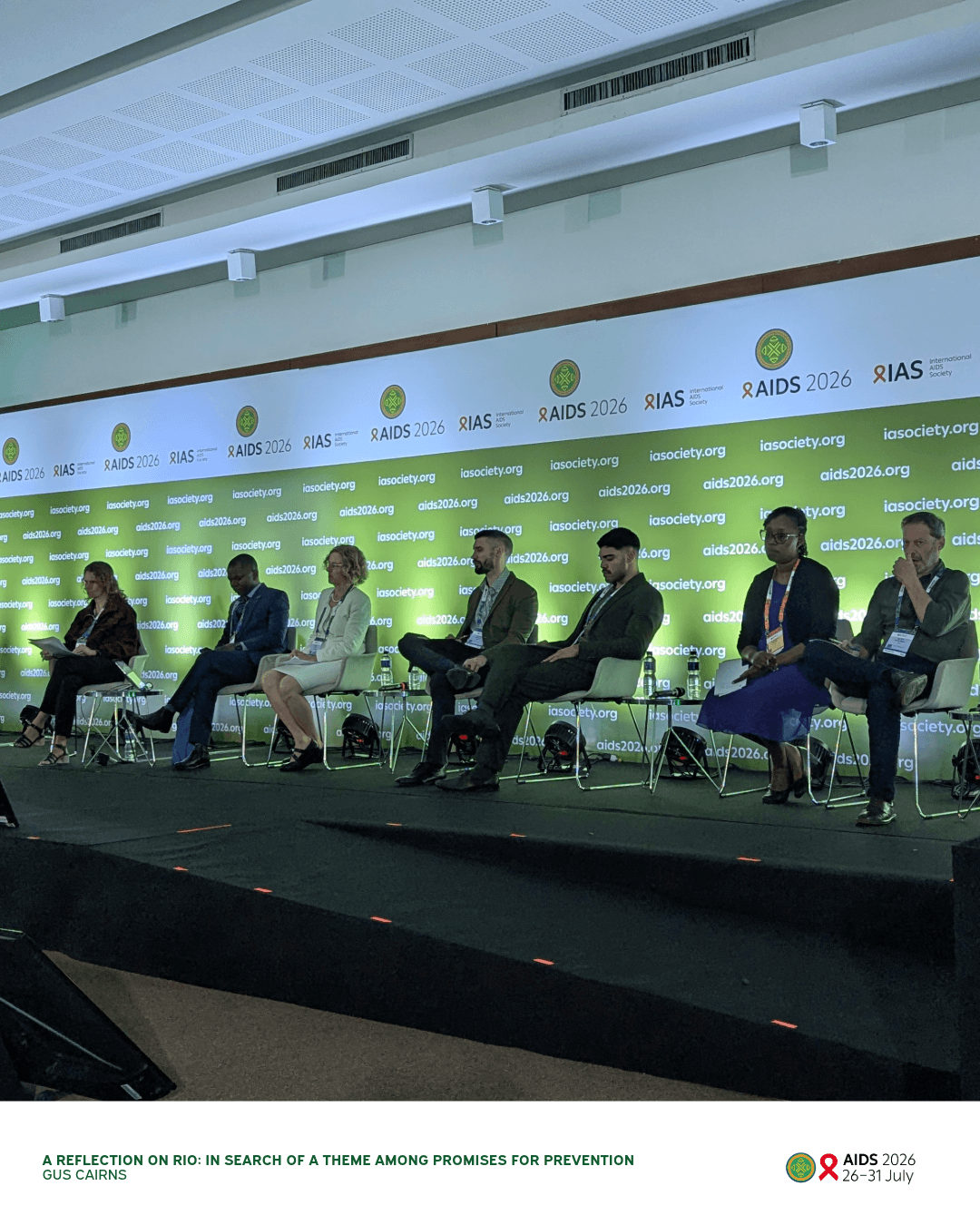
Some people will still need the reassurance and coverage provided by injectables. But, as PrEP pioneer Raphael Landovitz said in his plenary talk, when it comes to prevention, “Choice itself is an intervention” – the more prevention methods are available, the more prevention is used.
Even so, questions remain. It is notable that two regions were omitted from the EXPrESSIVE studies: Eastern Europe and the Middle East / North Africa. Even in Western Europe, only France and Switzerland are included. With lenacapavir, European regulators had to demand a European substudy, PURPOSE 5, before they could license it. I asked a Merck representative why there were no studies in Eastern Europe, given that there were stable and relatively high-income countries like Czechia, Croatia and Poland to conduct them in. “Europe is…difficult” was all he would say.
Europe had better stop being difficult if it is not to fall behind the rest of the world in treating and preventing HIV easily, cheaply and equitably. It’s going to be hard to do it everywhere in the next decade. The last thing Europe needs to do is make it harder still.
Gus Cairns
EATG Member

The Belong poster is available under ‘Materials’
[Images by Gus Cairns]

Materials
Get involved
Are you living with HIV/AIDS? Are you part of a community affected by HIV/AIDS and co-infections? Do you work or volunteer in the field? Are you motivated by our cause and interested to support our work?
Subscribe
Stay in the loop and get all the important EATG updates in your inbox with the EATG newsletter. The HIV & co-infections bulletin is your source of handpicked news from the field arriving regularly to your inbox.