
How can we ensure that the experience and knowledge built over decades of HIV activism continue to inspire, include and empower the generations shaping the future of our movement?
The HIV movement has been built through decades of activism and solidarity. People challenged discrimination, demanded treatment and made their voices heard when institutions would not listen. Their commitment and experience are an essential part of our collective history.
But the HIV landscape has changed, as have the people affected by it and the ways they engage with their communities. This raises an important question: how can HIV advocacy remain a space where different generations feel represented, connected and able to contribute?
A changing epidemic, changing experiences
For people who experienced the 1980s and 1990s, HIV was often associated with fear, loss and the fight for survival. Activism emerged from urgency: people organised, demanded treatment and challenged stigma.
Today, effective treatment allows people to live long and fulfilling lives; U=U has changed our understanding of transmission, and PrEP has expanded prevention options. Yet stigma, discrimination, inequalities in access and the social consequences of living with HIV remain.
Younger generations may encounter HIV through a different lens. Some have grown up with effective treatment already available; others have encountered HIV through prevention, sexual health services, relationships or a diagnosis, without necessarily having a strong connection to the history of the epidemic or the activism that shaped today’s response.
These experiences cannot be reduced to age groups: young people living with HIV have diverse experiences, and older generations continue to learn and adapt. Still, different historical contexts can shape how people understand HIV and engage with advocacy. The challenge may be less a gap in age or knowledge than a lack of opportunities to exchange experiences.
When advocacy does not always feel accessible
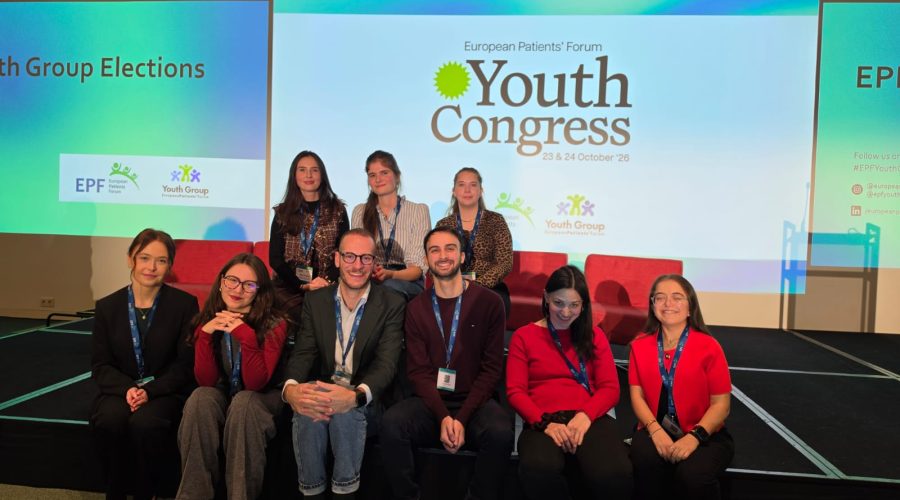
The first European Patients’ Forum (EPF) Youth Congress in Brussels in October 2026 raised an important question. The Congress, Securing the Future of Young Patient Advocacy in Times of Multiple Crises, brought together young advocates and representatives from across the European health ecosystem.
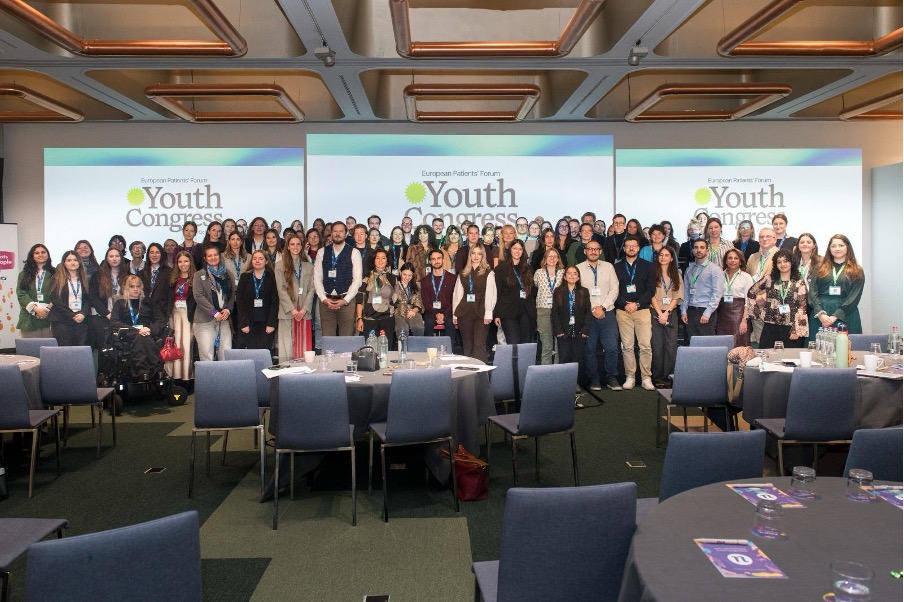 Participants of the first EPF Youth Congress, “Securing the Future of Young Patient Advocacy in Times of Multiple Crises”, held in Brussels on 23–24 October 2026.
One discussion in particular deserves reflection within the HIV movement.
During Plenary 2, Power & Participation: Who Gets a Seat at the Health Policy Table?, participants explored meaningful youth participation in health policy. One question was how to involve people who have lived experience of a condition but do not necessarily identify as patients or feel sick.
This is particularly relevant to HIV advocacy. Many people living with HIV do not define themselves primarily through their HIV status. They may not identify with traditional patient organisations, support groups or established forms of activism. Some may not know that opportunities to contribute exist.
It asks whether our ways of communicating and organising reach the diversity of people we aim to represent. Can people contribute without adopting a particular identity or taking on a formal role? Are we reaching beyond familiar networks?
Learning from one another, rather than replacing one another
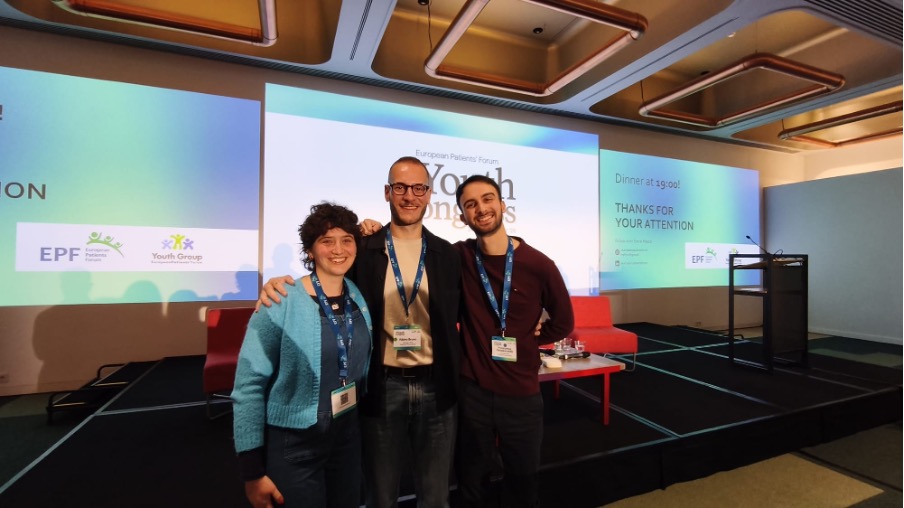 Chiara Longhi (Project Manager, EATG), Albino Bruno and Prodromos Paraskevaidis (EATG volunteers, left to right) at the EPF Youth Congress 2026 in Brussels.
An article published by the National HIV Story Trust in May 2026, Stories in Focus: Addressing the Generational Gap in HIV, reflects on the value of bringing people with different experiences of HIV together (1). Younger people may have limited knowledge of the epidemic’s history, while those who experienced its earlier years may be less familiar with the realities and challenges facing younger people today. The answer is not to position one generation as having more to teach than the other, but to create opportunities for dialogue.
A similar insight emerges from Hawkinson, Operario, Hess and van den Berg’s 2023 study, Bridging the age gap: intergenerational communication of HIV risk and prevention among younger and older men who have sex with men (2). Based on interviews with younger and older men who have sex with men, the study identifies differences in knowledge and perceptions of HIV prevention, while participants in both age groups emphasise the importance of intergenerational conversations.
Although focused on HIV prevention among men who have sex with men, the study offers a wider lesson: intergenerational communication can challenge assumptions and strengthen community connections.
Experienced activists carry knowledge of the movement’s history, the struggles behind hard-won progress and the importance of defending rights. Younger generations bring different experiences, perspectives and communication styles. They may identify emerging issues, reach communities through different channels and question approaches that no longer resonate. Neither contribution is more important: the movement is stronger when these experiences meet. These themes also reflect EPF Youth Congress discussions about participation, representation and the sustainability of patient advocacy.
Moving from intention to meaningful participation
Every organisation will need to find approaches that fit its context, but several practical steps can help.
1. Understand who we represent.
We need to understand who is involved and whose perspectives may be missing. Beyond membership numbers, this means listening and, where appropriate and with respect for privacy, understanding the diversity of our communities. We should not assume that younger people are absent because they are less visible in traditional spaces, or that existing participation reflects the wider HIV community.
2. Create different ways to get involved.
Not everyone wants to join a board or become a full-time activist. Some may prefer to contribute to a campaign, share an experience, take part in a consultation or join a project. Offer different levels of involvement to match people’s interests and availability. Meaningful participation should not require large amounts of unpaid time.
3. Invest in reciprocal mentorship and exchange.
Mentorship should be reciprocal. Experienced advocates can share knowledge of HIV history, community organising and political processes; younger advocates can contribute perspectives on digital communication, emerging priorities and new forms of mobilisation. Exchanges should be based on mutual respect and curiosity.
4. Share responsibility and decision-making power.
Beyond attending events or contributing to pre-designed campaigns, young people need opportunities to shape priorities, participate in governance and lead projects. This requires resources and support. A seat at the table matters only if people can influence decisions.
5. Communicate in ways that reflect people’s lives.
Preserve HIV history while connecting it with contemporary experiences. Digital platforms, peer initiatives, storytelling, informal discussions and partnerships with youth organisations or community networks can create new routes into advocacy. Digital engagement should complement, not replace, other forms of participation.
6. Make space for identities beyond the patient label.
Lived experience extends beyond diagnosis: HIV intersects with relationships, sexuality, mental health, work, housing, migration and ageing. People should be able to contribute without feeling their HIV status defines their identity. This includes recognising people engaged in prevention, including those using PrEP, and communities affected by HIV-related stigma.
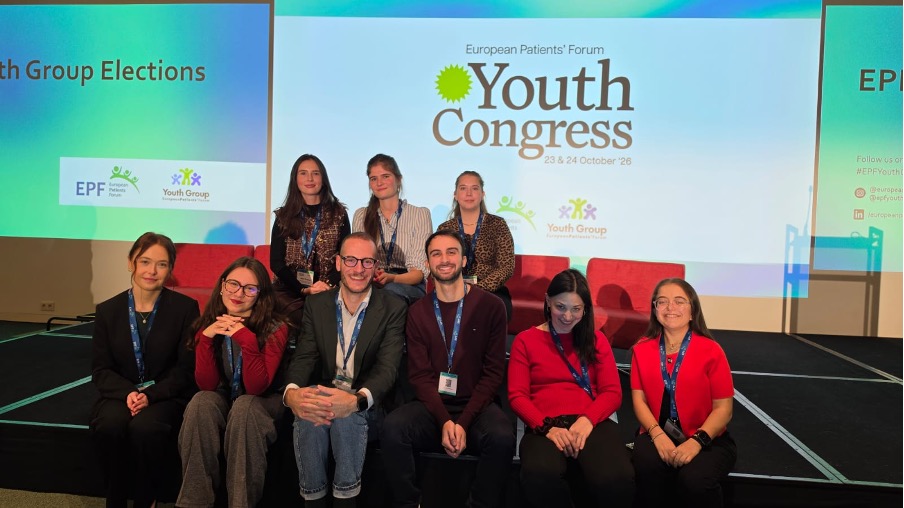 The newly elected EPF Youth Group after the Youth Group elections at the Congress, including Albino Bruno and Prodromos Paraskevaidis (front row, centre).
Sustainability means passing on responsibility
Intergenerational engagement is also essential to the sustainability of our organisations and the movement. Many HIV organisations have been built through the dedication of people who have invested years in advocacy. Their commitment deserves recognition, but organisations cannot rely indefinitely on the same people carrying the same responsibilities.
Knowledge transfer, leadership renewal and opportunities for new advocates are essential for continuity. This is not about replacing existing leaders; it is about sharing experience, distributing responsibilities and helping new people grow into leadership. Succession planning should be a collective responsibility. Organisations must pass on institutional knowledge while remaining open to being challenged and changed.
An invitation to start the conversation
We still need to understand the age composition and participation patterns within our organisations, and should avoid conclusions unsupported by evidence. A first step is to listen and ask: are we reaching the people we want to represent? Do they recognise themselves in our work and know how to contribute? Are we prepared to adapt?
Bridging generations is not a project for younger people alone, nor is it the responsibility only of those who have been involved in HIV advocacy for many years. It is a shared task.
The history of HIV activism reminds us what collective action can achieve. Our challenge now is to keep that spirit alive across generations, experiences and backgrounds. We should not have to choose between preserving the legacy of those who built this movement and making room for those who will shape its future.
The future of HIV advocacy should be built together, with every generation able to contribute, learn, lead and pass something on.
Albino Bruno
EATG member
Further reading
- National HIV Story Trust. (May 2026). Stories in Focus: Addressing the Generational Gap in HIV. Available at: https://nhst.org.uk/stories-in-focus-addressing-the-generational-gap-in-hiv/
- Hawkinson, D. E., Operario, D., Hess, S., & van den Berg, J. J. (2023). Bridging the age gap: intergenerational communication of HIV risk and prevention among younger and older men who have sex with men. AIDS Care, 35(4), 538–544. Read the study.

Related Blogs
Get involved
Are you living with HIV/AIDS? Are you part of a community affected by HIV/AIDS and co-infections? Do you work or volunteer in the field? Are you motivated by our cause and interested to support our work?
Subscribe
Stay in the loop and get all the important EATG updates in your inbox with the EATG newsletter. The HIV & co-infections bulletin is your source of handpicked news from the field arriving regularly to your inbox.