

The European AIDS Treatment Group (EATG) endorses the joint civil society statement led by PICUM, “No to EU law enabling home raids, policing of public services and racial profiling”, which, since earlier in 2026, has warned that the EU Return Regulation risks normalising surveillance, immigration raids, racial profiling, and the use of public services as instruments of migration enforcement. EATG shares its concerns regarding the impact of such measures on fundamental rights, public health, and access to treatment and care.
The statement highlights that detection and enforcement measures can deter people from seeking healthcare, education, and social services, creating fear and exclusion among already vulnerable communities. PICUM warns that such measures may undermine access to essential healthcare, including pregnancy-related care, treatment for chronic diseases, and vaccinations.
More information is available in PICUM’s statement: No to EU law enabling home raids, policing of public services and racial profiling
Latest Developments: European Parliament Approves Return Regulation
On 17 June, the European Parliament passed the so-called Return Regulation with 418 votes in favour, 218 against, and 30 abstentions. The legislation is intended to accelerate deportations and increase the enforcement of return decisions across the European Union.
The Regulation follows a political agreement reached between EU institutions on 1 June 2026. Among its most controversial elements are:
- The possibility for Member States to establish so-called “return hubs” in third countries outside the EU.
- Expanded detention powers and longer detention periods.
- Increased cooperation obligations imposed on migrants subject to return decisions.
- Enhanced surveillance and enforcement mechanisms designed to facilitate deportations.
- Broader powers for authorities, including measures that critics argue may enable intrusive searches, property seizure, biometric data collection, and home raids.
According to Reuters, the agreement allows rejected asylum seekers and other migrants ordered to leave the EU to be transferred to third-country “return hubs,” even when they have no personal connection to those countries. Human rights organisations have warned that the system could lead to arbitrary detention, rights violations, and reduced safeguards against wrongful removals.
Concerns have also been raised regarding the impact on LGBTI migrants. ILGA-Europe has warned that the Regulation expands detention, surveillance, and deportation powers in ways that could expose LGBTI people to heightened risks and weaken existing protections for individuals seeking safety from persecution based on sexual orientation, gender identity, gender expression, or sex characteristics.
UN Human Rights Chief Volker Türk similarly warned that the new rules risk expanding detention, establishing offshore return hubs, and weakening safeguards against refoulement -the return of individuals to places where they may face serious harm.
Further analysis is available from PICUM: EU deportations law: final talks expand repression and from ILGA-Europe: EU’s new Return Regulation will significantly affect LGBTI migrants
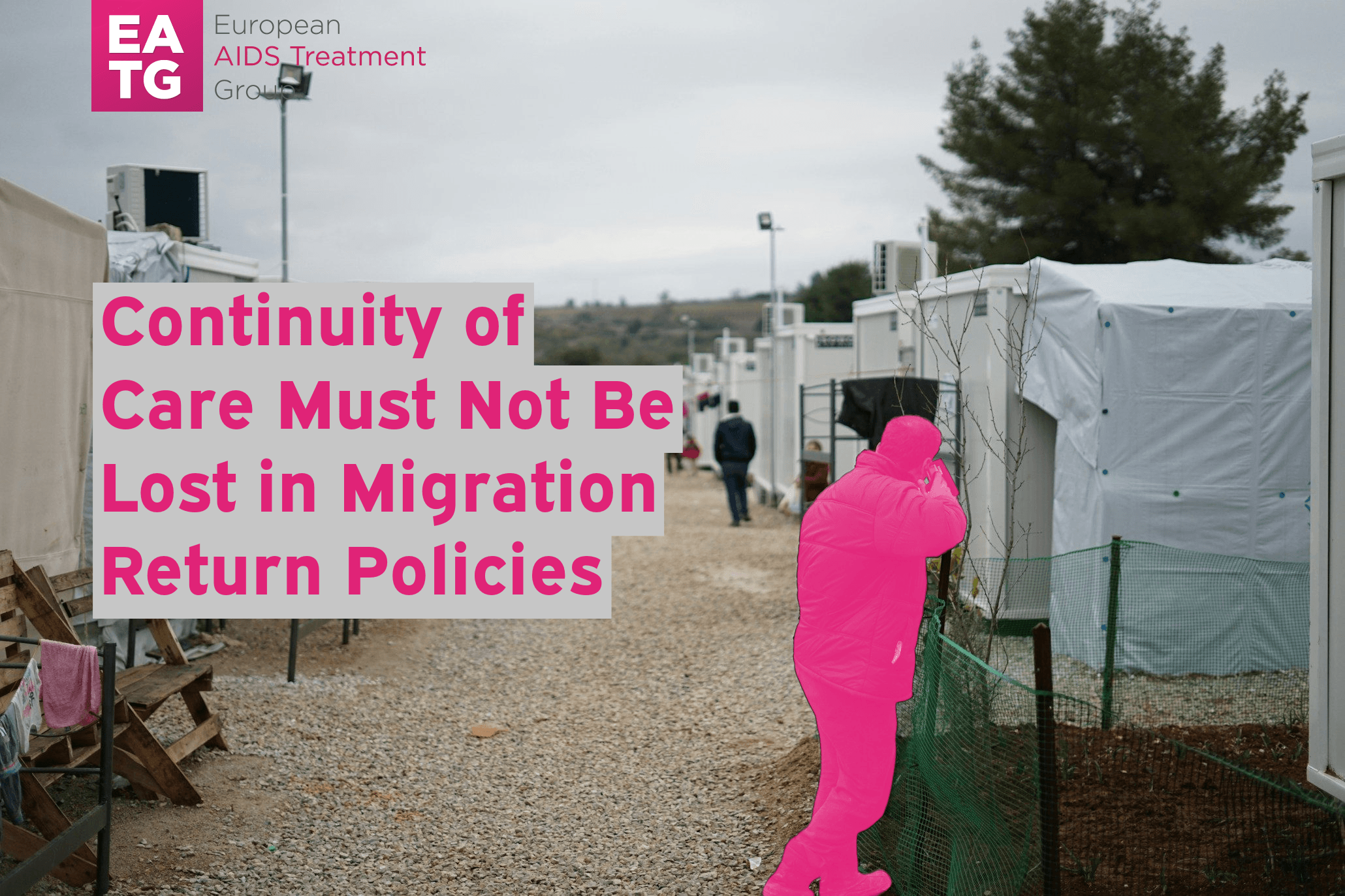
EATG: Continuity of Care Must Not Be Lost in Migration Return Policies
EU decision to strengthen migrant return and expulsion measures raises serious concerns about the consequences for health, continuity of care, and human dignity. Migration policies’ implementation must ensure that people are not expelled into situations where access to healthcare and follow-up cannot be guaranteed.
For migrants living with chronic conditions -including HIV, tuberculosis, viral hepatitis, mental health conditions, cancer, diabetes, or pregnancy-related healthcare needs- interruption of care can lead to treatment discontinuation, worsening health outcomes, increased transmission risks, and complete loss to follow-up.
Public health does not stop at borders.
The success of treatment programmes depends on continuity, trust in healthcare providers, and uninterrupted access to medicines and monitoring. Deportation or transfer procedures that fail to ensure continuity of care risk undermining public health, disease prevention, and treatment outcomes.
These concerns are particularly acute for people living with HIV. Interruptions in antiretroviral therapy can have serious consequences for people’s health and can jeopardise progress toward European and global HIV targets. Similar concerns apply to tuberculosis treatment, viral hepatitis care, mental health support, and other long-term health interventions that require sustained engagement with healthcare systems.
EATG therefore calls on European institutions and Member States to include clear health safeguards in all return procedures, including:
- Comprehensive medical assessment before return;
- Individual evaluation of treatment needs and healthcare access in the receiving country;
- Safe transfer of care and medical records where appropriate;
- Protection of uninterrupted access to medicines and treatment;
- Independent monitoring of continuity of care following return;
- Strong safeguards preventing enforcement measures from discouraging people from seeking healthcare.
No one should become medically invisible because of a migration decision.
Related News
-
EATG calls for unified actions to address the interconnected crises of gender-based violence and HIV/AIDS
-
Zero Discrimination Day: Closing the policy gap of the unfinished business of HIV and AIDS requires turning the page of several counter-productive laws
-
The first ever European-wide HIV stigma survey is launched
Get involved
Are you living with HIV/AIDS? Are you part of a community affected by HIV/AIDS and co-infections? Do you work or volunteer in the field? Are you motivated by our cause and interested to support our work?
Subscribe
Stay in the loop and get all the important EATG updates in your inbox with the EATG newsletter. The HIV & co-infections bulletin is your source of handpicked news from the field arriving regularly to your inbox.