
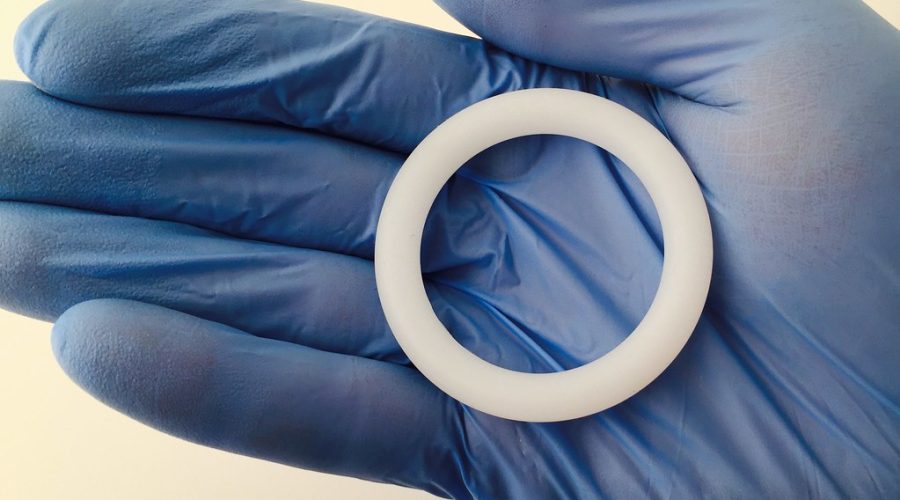
On a per-sex-act basis, the dapivirine vaginal ring is associated with a 62% reduction in the risk of HIV seroconversion, according to research conducted in sub-Saharan Africa.
About This Study
“Assessing Per-Sex-Act HIV-1 Risk Reduction Among Women using the Dapivirine Vaginal Ring” was published online on Dec. 14, 2023, in The Journal of Infectious Diseases. The lead author is Randy M. Stalter, Ph.D., M.P.H., of the Department of Epidemiology at the University of Washington in Seattle, Washington.
Key Research Findings
This secondary analysis of data from the ASPIRE trial of the dapivirine ring for HIV prevention in sub-Saharan Africa estimated ring efficacy per sex act to account for the variability of sexual behavior among trial participants. The analysis included 2,374 cisgender women who had been randomized 1:1 to dapivirine or placebo. Almost all participants had a primary partner and around 65% of male partners knew that their female partner was using the ring.
Participants were supposed to use the ring continuously for 28 days, with adherence assessed by drug levels in plasma and residual drug in returned rings. Sexual behavior was queried during quarterly interviews, including the number of vaginal sex acts and condom use. Participants in the analysis reported an average of 15 sex acts in the previous three months, and one-third reported condomless sex. Participants used contraception, with DMPA injections the most commonly used method.
In unadjusted models, consistent dapivirine ring use was associated with a 57% reduction in the risk of acquiring HIV during a single sex act. That number rose to 62% after adjustment for baseline characteristics–including background HIV rates among men in each location–and reported condomless sex. (In an adjusted and weighted model, the per-sex-act relative risk reduction rose to 63%.) Estimated seroconversions were 2.3/10,000 sex acts in the study drug arm compared to 3.6/10,000 sex acts in the control arm.
Discussion Highlights and Implications for Practice
Study limitations described included the self-reported nature of some data (e.g., number of sex acts) and the fact that around 45% of participants did not know their partner’s HIV status.
The researchers pointed out that while the dapivirine ring is not as efficacious as consistent condom use or daily pre-exposure prophylaxis, it is an important woman-controlled HIV prevention tool. Providers should discuss its risks and benefits compared to other methods to allow for patient-centered decision-making, they suggested.
Considering frequency of exposure, as in this per-sex-act analysis, should supplement intent-to-treat analyses when evaluating other HIV prevention methods under development, the authors concluded.
By Barbara Jungwirth
Source : TheBodyPro
Related HIV and Co-Infections News
-
[Report] ECDC | Overview of the provision of prevention and testing for HIV and STIs for sex workers in EU/EEA
-
Emory University | TB preventive treatment for people with HIV shown effective in real-world settings
-
Treatment Action Group | 2026 Pipeline Reports: Antiretroviral therapy, PrEP, Long-acting therapies
Get involved
Are you living with HIV/AIDS? Are you part of a community affected by HIV/AIDS and co-infections? Do you work or volunteer in the field? Are you motivated by our cause and interested to support our work?
Subscribe
Stay in the loop and get all the important EATG updates in your inbox with the EATG newsletter. The HIV & co-infections bulletin is your source of handpicked news from the field arriving regularly to your inbox.